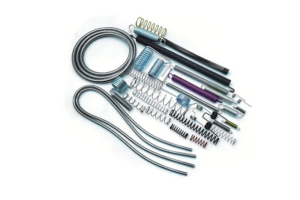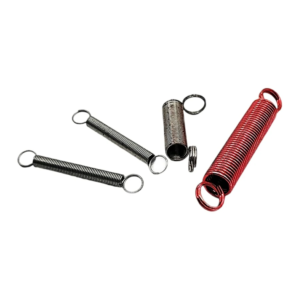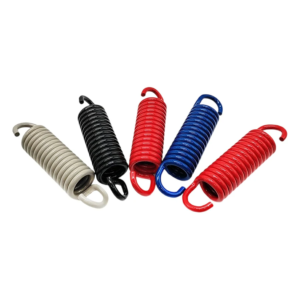
Component failure in medical devices jeopardizes critical equipment performance and directly compromises patient safety. To choose a reliable supplier for medical extension springs, OEM buyers must evaluate a manufacturer’s micro-precision CNC capabilities, medical-grade material expertise, fatigue validation processes, and strict batch traceability.
Partnering with an experienced medical spring manufacturer ensures seamless scaling from prototype to compliant mass production, reducing regulatory risks and ensuring flawless mechanical actuation in life-saving equipment.
Table of Contents
- Why Medical Device Springs Require Specialized Manufacturing
- Evaluating Medical-Grade Material Selection Capabilities
- Precision Extension Spring Design for Medical Applications
- Surface Treatment and Cleanliness Standards in Medical Manufacturing
- Validating Fatigue Life and Mechanical Reliability
- Key Medical Applications Utilizing Precision Extension Springs
- Transitioning from Medical Prototype to OEM Mass Production
1. Why Medical Device Springs Require Specialized Manufacturing
General industrial springs are built to deliver bulk force, but medical springs operate in microscopic, highly sensitive environments where even the slightest mechanical deviation is unacceptable.
Medical device springs require specialized manufacturing because microscopic dimensional deviations in wire diameter or initial tension can completely compromise the precise mechanical actuation of surgical tools and diagnostic equipment.
When sourcing components for medical assemblies, OEM engineers are frequently dealing with highly constrained installation spaces, often requiring miniature spring components. A specialized custom extension spring manufacturer utilizes advanced, multi-axis CNC coiling equipment capable of handling extremely fine wire diameters. This micro-precision manufacturing capability guarantees that the spring outer diameter (OD) and free length match the CAD models with near-perfect repeatability.
Furthermore, medical devices demand highly stable force control. If an extension spring used in a catheter or an endoscopic tool exhibits fluctuating initial tension across a production batch, the surgeon will experience inconsistent tactile feedback. Reliable extension spring manufacturers implement automated in-line optical inspection and digital load testing to ensure that every single micro-spring delivers the exact mechanical resistance specified by the engineering team.
2. Evaluating Medical-Grade Material Selection Capabilities
Medical applications expose internal components to harsh bodily fluids, extreme sterilization temperatures, and highly corrosive chemical cleaning agents.
A qualified custom extension spring manufacturer must provide expert medical material selection, offering surgical-grade stainless steels, titanium, and cobalt-based alloys that guarantee biocompatibility, corrosion resistance, and long-term stability.
Choosing the right material for medical extension springs goes far beyond basic tensile strength; it requires a deep understanding of the component’s contact environment and sterilization requirements. A standard high-carbon steel spring will instantly oxidize and contaminate a sterile medical environment. Therefore, medical device manufacturers rely on specialized non-corrosive alloys.
Stainless Steel vs. Titanium and Cobalt Alloys
For general medical instruments and external diagnostic housings, austenitic stainless steels like Type 302 and 304 offer a reliable baseline of strength and rust resistance. However, for devices that make direct contact with bodily tissues, or require prolonged exposure to aggressive sterilization (autoclaving), surgical-grade stainless steel such as 316LVM (Low Carbon, Vacuum Melted) is heavily preferred for its superior purity and resistance to pitting.
For highly advanced medical applications, such as implantable devices or non-magnetic imaging equipment (MRI machines), titanium alloys and cobalt-based alloys (like Elgiloy or Phynox) are specified. These materials offer extreme fatigue life, absolute non-magnetic properties, and unmatched biocompatibility.
Medical Grade Spring Material Comparison Matrix
| Material Grade | Key Metallurgical Properties | Corrosion Resistance / Sterilization | Common Medical Applications |
| Type 302/304 Stainless | Good tensile strength, standard purity. | High (Suitable for standard chemical cleaning). | External monitors, hospital bed mechanisms, basic instruments. |
| Type 316LVM Stainless | Vacuum melted for extreme purity, added molybdenum. | Very High (Resists pitting from bodily fluids and chlorides). | Surgical instruments, biopsy devices, fluid delivery systems. |
| Titanium Alloys | High strength-to-weight ratio, completely non-magnetic. | Ultimate (Fully biocompatible). | MRI-safe diagnostic equipment, implantable mechanisms. |
| Cobalt-Based Alloys | Extreme fatigue resistance, retains strength at high temps. | Ultimate (Autoclave safe, highly biocompatible). | High-cycle surgical tools, advanced pacemakers, dental tools. |
3. Precision Extension Spring Design for Medical Applications
Translating a medical device concept into a highly functional electromechanical assembly requires deep design optimization prior to manufacturing.
Medical extension spring design must meticulously calculate free length, initial tension, and hook configuration to minimize stress concentrations and ensure a perfectly predictable force output within highly confined installation spaces.
Engineering custom tension springs for medical use requires a collaborative effort between the OEM design team and the spring manufacturer. Because space is at an absolute premium inside modern medical devices, the spring index (the ratio of mean coil diameter to wire diameter) must be carefully calculated to prevent the material from yielding under operational loads.
Hook Configuration and Stress Concentration
The most vulnerable aspect of any extension spring is the end hook or loop. In medical devices, a broken hook can lead to catastrophic device failure mid-operation. Furthermore, standard open hooks can easily snag on internal surgical tubing or delicate wiring. A professional supplier providing extension spring design support will frequently recommend specialized closed loops, insert swivel hooks, or highly customized end geometries that securely anchor the spring while dramatically reducing bending and torsional stress.
Calculating Initial Tension for Precise Dosing
In medical fluid systems and drug delivery mechanisms, initial tension—the internal force that holds the coils tightly closed—is a critical design parameter. The spring must be wound to require an exact amount of force before it begins to extend. This ensures that valves open only at specific pressure thresholds and that auto-injectors deploy medication at a strictly controlled rate.
4. Surface Treatment and Cleanliness Standards in Medical Manufacturing
A perfectly coiled spring is completely useless in a medical setting if it carries residual machining oils, metal dust, or microscopic burrs.
Medical spring suppliers must utilize advanced surface treatments, including chemical passivation and ultrasonic cleaning, to deliver burr-free, oil-free components that meet stringent medical cleanliness and sterilization standards.
Unlike industrial machinery, medical equipment requires components that are surgically clean upon delivery. During the CNC coiling process, microscopic particles of free iron can embed themselves into the surface of a stainless steel spring. If left untreated, this free iron will oxidize, causing surface rust even on high-grade stainless steel.
To prevent this, reliable tension spring manufacturers utilize chemical passivation (typically governed by ASTM A967 standards). This process involves submerging the custom extension springs in a nitric or citric acid bath, which dissolves the free iron and accelerates the formation of a dense, protective chromium oxide layer on the surface. Following passivation, the springs undergo rigorous ultrasonic cleaning to remove any residual chemical traces or microscopic burrs, ensuring the components are delivered in an oil-free, sterile-ready condition.
5. Validating Fatigue Life and Mechanical Reliability
Medical devices such as auto-injectors, ventilators, and surgical staplers perform thousands to millions of critical cycles throughout their operational lifecycle.
To ensure long-term reliability, OEM buyers must select extension spring manufacturers capable of performing rigorous physical fatigue testing, process validation, and absolute material traceability across every production batch.
Fatigue performance is arguably the most critical purchasing criterion for life-saving medical assemblies. A spring that loses its tension over time (known as relaxation) will cause a medical device to malfunction, resulting in incorrect drug dosages or incomplete surgical clamp retractions.
A qualified medical spring supplier conducts extensive cycle testing during the prototype phase. By simulating the exact working extension length and actuation speed of the medical device, the manufacturer can validate the expected fatigue life of the spring. Furthermore, strict material traceability is mandatory. The supplier must maintain exact records (Material Test Reports) linking every batch of springs back to the original wire melt, ensuring complete accountability for FDA or CE regulatory audits.
6. Key Medical Applications Utilizing Precision Extension Springs
Tension springs drive the invisible return mechanisms and force-delivery systems in numerous critical healthcare and therapeutic devices.
Custom extension springs are critical for delivering accurate medication in drug delivery devices, providing precise return forces in surgical instruments, and ensuring long-term reliability in diagnostic and rehabilitation equipment.
Drug Delivery Devices
In applications such as auto-injectors, inhalers, and automated infusion systems, highly predictable spring force is mandatory. Extension springs control the exact actuation speed and force required to puncture the skin and deliver a precise volume of medication. Any deviation in spring tension directly impacts patient dosing accuracy.
Surgical Instruments
From endoscopic instruments and biopsy devices to heavy-duty surgical retractors and clamps, custom extension springs provide the precision movement and consistent return force required for surgical control. Because these tools must be maneuvered inside the human body, the springs are engineered for highly compact designs without sacrificing pulling power.
Diagnostic Equipment and Rehabilitation
Medical extension springs operate heavy-duty imaging systems, patient monitoring equipment, and critical ventilator components where long service life is a priority. Additionally, in rehabilitation and assistive devices (such as motion-assistance braces or adjustable hospital beds), custom tension springs provide tailored force profiles that aid in patient mobility and ergonomic adjustment.
7. Transitioning from Medical Prototype to OEM Mass Production
The medical device product lifecycle—from initial R&D prototyping to final regulatory approval and market launch—is notoriously long, complex, and highly regulated.
A reliable custom extension spring manufacturer supports the entire medical OEM lifecycle, transitioning seamlessly from rapid prototyping and pilot validation to highly stable, traceable mass production without losing quality consistency.
Many suppliers can produce a few high-quality samples, but medical OEMs require a partner who can scale up to millions of units while strictly adhering to ISO 13485-aligned quality management principles. This requires robust engineering communication, continuous design optimization, and vast, highly controlled production infrastructure.
As an experienced manufacturing partner, Guangdong Hershey Spring Industrial Co., Ltd. (Hessp) understands the rigorous demands of the medical supply chain. To guarantee seamless scaling from prototype to mass production, we operate a modern, advanced facility fully equipped with 50 high-precision CNC machines. This extensive capacity ensures stable delivery and exact repeatability across high-volume OEM orders.
We maintain strict quality control and traceability across our comprehensive product offerings to support complex medical device assemblies:
- Precision Springs
- Metal Clips & Contacts
- Precision Stamping Components
- Precision Welding Assemblies
- Elastic Structural Components
By partnering with a true manufacturer equipped with deep engineering support and extensive production capacity, medical device OEMs can eliminate supply chain bottlenecks, reduce component failure risks, and accelerate their product’s time-to-market.
Conclusion
Choosing the right extension spring supplier for medical devices is a critical supply-chain decision that directly impacts product quality, FDA/CE compliance, and patient safety. By rigorously evaluating a supplier’s micro-precision manufacturing capabilities, their expertise in medical-grade alloys (like 316LVM and Titanium), their surface treatment protocols, and their ability to validate fatigue life, OEM buyers can confidently secure a long-term manufacturing partner.
Are you developing a new medical device that requires highly reliable, precision-engineered tension springs?
Contact the engineering team at Guangdong Hershey Spring Industrial Co., Ltd. today. Send us your CAD drawings, technical specifications, or functional requirements, and we will provide comprehensive application analysis, medical material recommendations, and a customized quotation to support your transition from prototype to secure mass production.
Frequently Asked Questions (FAQ)
What is the difference between standard industrial springs and medical device springs?
Medical device springs require significantly tighter dimensional tolerances, specialized biocompatible materials, advanced surface treatments (like passivation for cleanliness), and strict lot traceability to meet FDA or ISO 13485 regulatory standards.
Why is 316LVM stainless steel used for medical custom extension springs?
316LVM (Low Carbon, Vacuum Melted) is a surgical-grade stainless steel that offers a highly pure microstructure. It is heavily utilized in medical applications because it provides exceptional resistance to pitting and corrosion from harsh bodily fluids and repeated chemical sterilization.
What is passivation, and why do medical extension springs need it?
Passivation is a chemical process (typically an acid bath) that removes free iron from the surface of stainless steel components. For medical springs, this process prevents surface rust, enhances the protective chromium oxide layer, and ensures the component meets strict medical cleanliness standards.
How does initial tension affect drug delivery devices like auto-injectors?
Initial tension determines the exact amount of internal force holding the spring coils together. In drug delivery devices, this tension must be precisely calculated and manufactured to ensure the medication is deployed at the exact required pressure, preventing under-dosing or painful over-pressurization.
Can a custom extension spring manufacturer create non-magnetic springs for MRI equipment?
Yes. For diagnostic equipment highly sensitive to magnetic fields, a capable manufacturer will recommend and coil custom tension springs using titanium alloys or specialized cobalt-based alloys (like Elgiloy), which provide excellent strength while remaining completely non-magnetic.
How do suppliers ensure quality consistency when moving to mass production?
Reliable tension spring manufacturers utilize advanced multi-axis CNC coiling machines equipped with in-line laser micrometers and digital load testers. This automated equipment continuously measures the micro-dimensions and spring force in real-time, ensuring absolute batch consistency for medical OEMs.