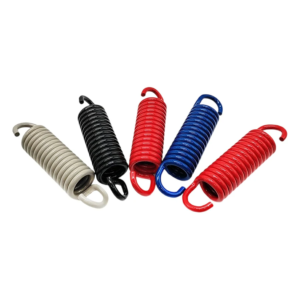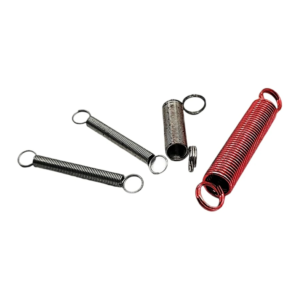
Selecting an extension spring manufacturer involves far more than comparing baseline prices; it requires a rigorous technical evaluation of a supplier’s engineering and production infrastructure. To prevent mechanical failures and ensure stable supply, buyers must verify a custom extension spring manufacturer’s CNC capabilities, materials expertise, design optimization skills, and batch-to-batch quality control systems.
Partnering with an experienced, true manufacturer ensures your components survive demanding operating conditions, bridging the gap between theoretical CAD designs and reliable high-volume production.
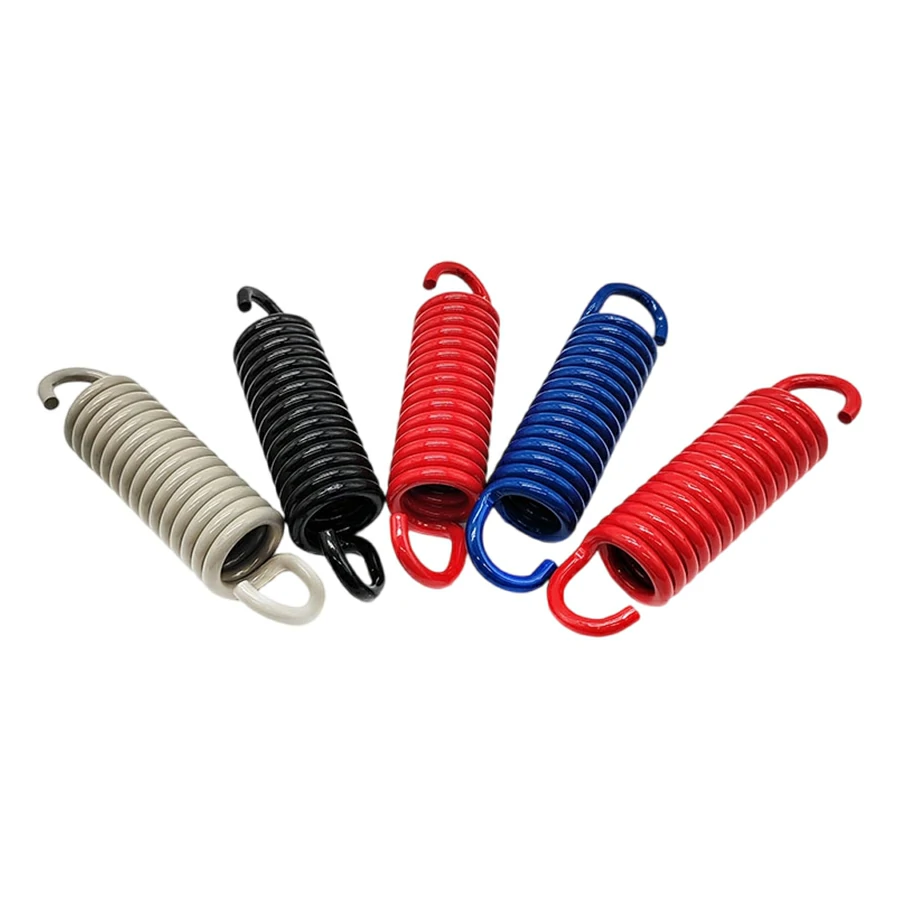
Table of Contents
- Can You Manufacture Custom Extension Springs Based on Our Requirements?
- Do You Provide Comprehensive Extension Spring Design Support?
- What Materials Can You Provide for Specific Operating Environments?
- What Are Your In-House Manufacturing Capabilities and Equipment?
- Can You Support the Transition from Prototype to Mass Production?
- How Do You Control Product Quality and Batch Consistency?
- What Specific Industries and Applications Have You Supported?
- Can You Engineer and Manufacture Complex Spring Designs?
- What Is Your Production Capacity and Delivery Ability?
- Can You Support Long-Term OEM Cooperation?
1. Can You Manufacture Custom Extension Springs Based on Our Requirements?
A standard catalog spring rarely satisfies the precise spatial limitations and dynamic load profiles of specialized OEM equipment. The first metric of evaluation is a supplier’s absolute flexibility in custom fabrication.
A reliable supplier must support fully custom extension springs by engineering exact wire diameters, free lengths, specific load requirements, and custom hook configurations tailored directly to your assembly’s working environment.
Different applications demand wildly varying structural parameters. When an extension spring operates inside an automotive latch or an industrial lever, the installation space is strictly defined. A competent supplier evaluates the exact distance between the mounting pins and calculates the maximum allowable outer diameter (OD). Furthermore, they must possess the machinery to control the spring’s initial tension—the tightly wound internal force that keeps the coils together. Without the ability to manipulate initial tension during the coiling process, a supplier cannot provide the precise starting force required for tactile mechanical switches or return mechanisms.
2. Do You Provide Comprehensive Extension Spring Design Support?
Many OEM procurement teams and industrial designers submit drawings that are conceptually sound but practically difficult to manufacture at scale without high scrap rates.
Professional tension spring manufacturers provide vital extension spring design support., analyzing CAD drawings to optimize spring structure, recommend improvements, and prevent mechanical issues such as insufficient tension or excessive stress.
A qualified engineering team does not just blindly program a CNC machine; they perform a Design for Manufacturability (DFM) review. For example, they will calculate the spring index ($C = D/d$, where $D$ is the mean coil diameter and $d$ is the wire diameter). If the index is too tight, the spring becomes nearly impossible to coil without micro-fracturing the wire. If the index is too large, the spring will easily tangle and distort during packaging and assembly. By actively adjusting these parameters before production, the manufacturer saves the buyer thousands of dollars in tooling modifications and prevents catastrophic field failures.
3. What Materials Can You Provide for Specific Operating Environments?
A beautifully designed spring will fail rapidly if it is manufactured from an alloy that cannot withstand the thermal or chemical realities of its operating environment.
A qualified supplier must recommend suitable materials—ranging from high-carbon steel for maximum strength to specialized stainless alloys for corrosion resistance—based entirely on the component’s fatigue performance and expected service life.
Material selection dictates both the physical endurance and the final unit cost of the spring. For heavy industrial machinery operating indoors, standard carbon steels offer immense tensile strength. However, if the spring is exposed to battery coolants in an electric vehicle (EV) or caustic sterilization chemicals in medical devices, advanced metallurgy is mandatory.
Material Performance Comparison for Custom Springs
| Material Grade | Industry Standard | Tensile Strength | Corrosion Resistance | Optimal B2B Application |
| High-Carbon Music Wire | ASTM A228 | Extremely High | Low (Plating required) | Enclosed industrial mechanisms, standard mechanical returns. |
| Chrome Silicon Alloy | SAE 9254 | High | Low (Plating required) | High-stress, high-cycle automotive components. |
| 304 / 316 Stainless Steel | ASTM A313 | Moderate | High | Food processing equipment, general medical devices. |
| 17-7 PH Stainless Steel | ASTM A313 | Very High | Very High | Aerospace, extreme temperature environments, EV components. |
| Phosphor Bronze | ASTM B159 | Low | High | Electrical contacts, non-magnetic instrument requirements. |
4. What Are Your In-House Manufacturing Capabilities and Equipment?
Sourcing components through a trading company masks the true capabilities of the production floor, leading to communication breakdowns when technical adjustments are required.
A premier custom extension spring manufacturer maintains complete in-house production capabilities, utilizing advanced processing equipment and stringent quality inspection methods to handle demanding industrial applications.
To guarantee structural integrity and precise repeatability, a facility must be built on advanced technological infrastructure. Operating from a newly relocated factory equipped with 50 high-precision CNC machines, we ensure that every geometric bend, pitch variation, and hook angle is digitally controlled to eliminate human error.
By maintaining direct oversight of our manufacturing footprint, we ensure uncompromising quality across all our specialized engineering divisions, including:
- Precision Springs
- Metal Clips & Contacts
- Precision Stamping Components
- Precision Welding Assemblies
- Elastic Structural Components
This direct manufacturing capability allows OEM buyers to bypass middlemen, ensuring transparent communication and rapid iteration during complex mechanical developments.
5. Can You Support the Transition from Prototype to Mass Production?
A supplier who can hand-bend five perfect samples might completely fail when tasked with automating the production of five hundred thousand units.
A highly reliable supplier supports the complete product development lifecycle, seamlessly bridging initial engineering evaluation and physical prototype testing directly into high-volume production scaling.
The transition from R&D to full assembly line integration is a high-risk phase for OEM customers developing new products. A capable manufacturer utilizes identical CNC parameters for the prototype batch as they do for the final mass-production run. This ensures that the physical load testing, fatigue analysis, and tactile feedback approved by your engineering team during the sample phase will remain completely identical when the volume scales up.
6. How Do You Control Product Quality and Batch Consistency?
Approving a perfectly tensioned first article is irrelevant if the supplier cannot replicate that exact tension on the millionth unit off the line.
Strict quality control is maintained by implementing continuous dimensional monitoring, automated spring force testing, and comprehensive batch inspection procedures to guarantee absolute consistency across repeated orders.
For precision components, stable quality during mass production is the ultimate test of a supplier. Advanced factories utilize in-line optical sorting systems and lasers directly attached to the CNC coilers. If a spring’s extended length or hook angle deviates by even a fraction of a millimeter, the machine instantly ejects the out-of-tolerance part. Furthermore, dynamic load testing rigs must be used to verify that the spring delivers the exact specified pull force at its maximum working extension, ensuring complete mechanical reliability for the end user.
7. What Specific Industries and Applications Have You Supported?
Cross-industry manufacturing experience proves that a supplier understands the vast differences in regulatory standards, safety margins, and operating environments.
Experienced extension spring manufacturers possess deep application knowledge across critical sectors, providing stable force performance for automotive mechanisms, high cycle life for industrial equipment, and extreme precision for medical devices.
Automotive and EV Components
Automotive buyers demand absolute durability. Extension springs used in vehicle lock mechanisms, seat adjustment structures, and pedal return systems must survive continuous high-frequency vibration and extreme temperature shifts. For modern EV applications, springs must also be exceptionally lightweight and corrosion-resistant, necessitating a supplier with strict automotive OEM production experience and process control.
Industrial and Medical Applications
In heavy industrial machinery, custom extension springs power repeated operations in robotic arms and tensioning belts, requiring high cycle life and accurate force output to prevent machine downtime. Conversely, medical equipment requires incredibly compact, clean-room-ready components. Medical OEMs evaluate suppliers based on their material traceability, manufacturing consistency, and ability to handle surgical-grade stainless steels without surface contamination.
8. Can You Engineer and Manufacture Complex Spring Designs?
The installation space within modern mechanical assemblies is shrinking, forcing springs to navigate around other moving parts and attach to non-standard mounting pins.
When applications require compact dimensions and specific tension forces, a manufacturer with strong engineering capability can custom-form special hooks and complex structural designs to overcome strict assembly limitations.
The end configurations—the hooks or loops—are the most highly stressed segments of any extension spring. During extension, these ends endure a combination of severe bending and torsional stress. A capable supplier can program multi-axis CNC machines to form complex geometries such as extended open hooks, side loops, cross-center machine loops, or fully customized insert structures. By calculating the exact stress concentration on the bending radius, the manufacturer prevents the hook from snapping prematurely under heavy cyclic loading.
9. What Is Your Production Capacity and Delivery Ability?
A brilliant technical design is useless if the supplier cannot deliver the volume required to keep your assembly lines running smoothly.
Long-term OEM suppliers guarantee supply reliability by maintaining vast production capacity, stable raw material sourcing, and strict lead time control to seamlessly manage rapid volume increases and repeat orders.
Evaluating a supplier’s capacity involves looking at their machine redundancy. If a supplier only has one machine capable of producing your specific spring wire diameter, a single mechanical breakdown will halt your entire supply chain. A robust supplier utilizes a fleet of advanced equipment to absorb sudden spikes in order volume, offering buffer stock programs and reliable delivery schedules that integrate perfectly into your Just-In-Time (JIT) manufacturing workflows.
10. Can You Support Long-Term OEM Cooperation?
The best manufacturing partnerships evolve over time, focusing on continuous process improvement and cost reduction rather than a transactional, one-off purchase.
The ideal OEM custom extension spring manufacturer actively supports long-term cooperation through transparent technical communication, continuous design improvement, and seamless integration with future product updates.
As your product moves into its second or third generation, the mechanical requirements will likely change. A trusted supplier actively engages in Value Analysis and Value Engineering (VAVE). They routinely review the production data of your custom tension springs to identify areas where material yields can be improved or machining speeds increased, ultimately passing those cost savings back to the OEM and solidifying a mutually beneficial, long-term supply chain partnership.
Conclusion
Choosing the right extension spring manufacturer is a critical procurement decision that directly impacts the mechanical safety, performance, and lifecycle of your final product. By systematically asking these ten questions, OEM buyers can confidently evaluate a supplier’s CNC production capabilities, their depth of engineering support, their metallurgical expertise, and their ability to guarantee flawless batch consistency. Moving beyond simple price comparisons to assess true factory capability ensures that you partner with a manufacturer capable of scaling reliably from your first prototype to full-scale mass production.
Are you ready to optimize the performance of your mechanical assemblies?
Send your extension spring drawings, physical samples, or technical specifications to the engineering team at Guangdong Hershey Spring Industrial Co., Ltd. for a comprehensive manufacturing evaluation. We provide actionable design suggestions, expert material recommendations, and highly competitive quotations to ensure your project’s success. Contact us today to begin your technical review.
Frequently Asked Questions (FAQ)
What is the primary difference between a custom extension spring and a standard one?
Standard catalog springs are pre-manufactured to generic dimensions and force outputs, which often fail to fit tight OEM assemblies perfectly. Custom extension springs are engineered to your exact specifications, optimizing wire diameter, initial tension, and hook geometry for your unique application space.
How does initial tension affect the performance of an extension spring?
Initial tension is the internal force coiled into the spring that keeps the coils tightly closed. It determines the minimum amount of force required to begin extending the spring. Custom manufacturers can tightly control this tension to provide specific tactile feedback for switches and reliable return speeds for mechanisms.
Why is the hook design so critical in custom tension springs?
The hooks or loops are the primary points of load transfer and represent the weakest point of the spring due to high bending and torsional stresses. An engineered hook design ensures the bending radius is wide enough to dissipate stress, preventing the spring from snapping prematurely.
What materials are best for extension springs used in corrosive environments?
For high moisture or corrosive environments, stainless steel alloys (such as Type 302, 316, or 17-7 PH) are highly recommended. These materials resist rust and chemical degradation without the need for secondary protective plating, which can sometimes flake off or cause hydrogen embrittlement.
How do manufacturers guarantee batch consistency over millions of units?
Top-tier manufacturers rely on multi-axis CNC coiling machines equipped with in-line laser measurement and optical inspection systems. These technologies continuously monitor the spring’s physical dimensions and immediately eject any parts that fall outside of the strict engineering tolerances.
What information do I need to provide to get a quotation?
To receive an accurate evaluation and quote, you should provide a technical drawing specifying the wire diameter, outer diameter, free length (inside hooks), required material, specific hook type, desired working load at maximum extension, and your estimated production volume.