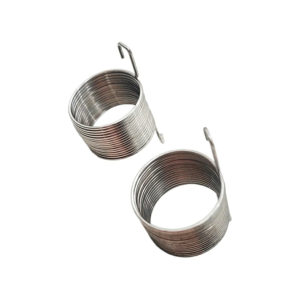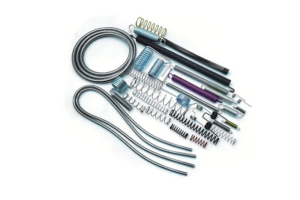
Selecting the incorrect material for industrial mechanical components leads to catastrophic fatigue snapping or rapid oxidative degradation, instantly paralyzing OEM assembly lines. The best choice depends entirely on the operating environment: carbon steel offers superior mechanical strength and cost-efficiency for dry, high-cycle applications, while stainless steel is essential for mechanisms exposed to moisture, chemicals, or outdoor conditions.
Partnering with an expert custom extension spring manufacturer ensures that you achieve the optimal balance of metallurgical properties, mechanical design, and long-term reliability for your specific industrial application.
Table of Contents
- The Core Problem: Why Material Selection Defines Spring Lifecycle
- Carbon Steel Extension Springs: High Strength for Controlled Environments
- Stainless Steel Extension Springs: Ultimate Corrosion Resistance
- Material Performance Comparison Matrix for Custom Springs
- Critical Extension Spring Design Factors Beyond Material
- Key Industry Applications Dictating Material Choice
- How a Custom Extension Spring Manufacturer Ensures OEM Reliability
1. The Core Problem: Why Material Selection Defines Spring Lifecycle
Material selection is the foundational decision in tension spring design, dictating the physical endurance, fatigue limit, and environmental resilience of the component. Choosing the wrong alloy guarantees premature failure, either through rapid rust degradation or insufficient tensile strength under dynamic loads.
When an extension spring is stretched, the coiled wire undergoes intense torsional stress, while the hooks endure a complex combination of bending and torsional forces. The material must possess a high enough elastic limit to return to its original closed state millions of times without yielding. If OEM buyers specify a low-grade material to cut initial costs, the spring will suffer from “relaxation” (a permanent loss of return force) or snap outright at the hook radius. A professional engineering review must evaluate the exact load requirements and the atmospheric conditions of the installation space to recommend the correct metallurgical profile.
2. Carbon Steel Extension Springs: High Strength for Controlled Environments
For mechanisms protected from the elements, high-carbon alloys provide the highest baseline mechanical performance available in the wire-forming industry.
Carbon steel extension springs are engineered for applications demanding maximum tensile strength, excellent fatigue resistance, and cost-effective mass production, making them the ideal choice for indoor industrial machinery and sealed automotive components.
Carbon steel alloys, such as Music Wire (ASTM A228) and Hard Drawn MB (ASTM A227), derive their immense strength from a high carbon content and a rigorous cold-drawing manufacturing process. This results in a material with a remarkably high yield strength-to-cost ratio. When space is severely limited, carbon steel allows for the design of highly compact extension springs that can still deliver massive pulling forces.
However, the critical consideration for carbon steel is its high susceptibility to oxidation. Because it lacks protective alloying elements like chromium, carbon steel will rust rapidly if exposed to ambient humidity. To mitigate this, custom extension springs made from carbon steel require secondary surface treatments, such as zinc electroplating, black oxide coating, or light oiling. When plating high-carbon steel, the manufacturer must implement strict post-baking procedures to eliminate hydrogen embrittlement—a phenomenon where hydrogen atoms penetrate the steel lattice during plating, causing sudden, brittle fractures under load.
3. Stainless Steel Extension Springs: Ultimate Corrosion Resistance
When mechanical assemblies operate outdoors, in medical cleanrooms, or inside fluid systems, standard coatings are insufficient, mandating the use of specialized alloys.
Stainless steel extension springs utilize chromium-rich alloys to form a passive oxide layer, providing exceptional, continuous resistance to rust, moisture, and chemical degradation without the need for secondary protective plating.
Stainless steel achieves its corrosion resistance through the inclusion of at least 10.5% chromium. When exposed to oxygen, this chromium forms a microscopic, self-repairing layer of chromium oxide that shields the underlying iron from oxidation. The most commonly specified grades in tension spring design are Type 302 and Type 304 (ASTM A313), which offer a balanced profile of good tensile strength and excellent environmental resilience. For extreme environments, such as marine equipment or chemical processing valves, Type 316 stainless steel is utilized due to the addition of molybdenum, which prevents pitting from chlorides and harsh solvents.
Engineers must account for the mechanical trade-offs when specifying stainless steel. Standard austenitic stainless steels generally possess an elastic limit roughly 10% to 15% lower than high-carbon music wire of the same diameter. This means a stainless steel spring may require a slightly larger wire diameter to achieve the exact same load profile and initial tension as a carbon steel equivalent.
4. Material Performance Comparison Matrix for Custom Springs
Evaluating carbon versus stainless steel requires a direct, data-driven comparison of tensile strength, fatigue life, environmental resilience, and overall cost-efficiency.
To choose the right material, OEM buyers must align their mechanical load requirements and environmental exposure with the specific metallurgical properties of carbon and stainless steel alloys.
The following table provides a professional baseline for comparing the most common extension spring materials:
| Material Type | Primary Standard | Tensile Strength | Fatigue Life | Corrosion Resistance | Relative Cost |
| High-Carbon Music Wire | ASTM A228 | Very High | Excellent | Poor (Requires plating) | Low |
| Chrome Silicon Alloy | SAE 9254 | High | Ultimate | Poor (Requires plating) | Medium |
| Stainless Steel 302/304 | ASTM A313 | Medium-High | Good | High (Self-protecting) | Medium-High |
| Stainless Steel 316 | ASTM A313 | Medium | Good | Very High (Marine grade) | High |
| 17-7 PH Stainless Steel | ASTM A313 | Very High | Excellent | Very High | Premium |
Note: 17-7 PH is a precipitation-hardening stainless steel used when an application demands both the extreme tensile strength of carbon steel and the corrosion resistance of 316 stainless.
5. Critical Extension Spring Design Factors Beyond Material
Even the most premium aerospace-grade material cannot compensate for a fundamentally flawed mechanical design.
A proper extension spring design must carefully optimize wire diameter, spring outer diameter, initial tension, and the specific hook configuration to mitigate localized stress concentrations and ensure long-term mechanical reliability.
When working with a custom extension spring manufacturer, OEM buyers must evaluate several interconnected geometric factors:
- Initial Tension: Unlike compression springs, extension springs are wound with internal tension that presses the coils together. This is the minimum force required to separate the coils. The chosen material heavily influences the maximum achievable initial tension.
- Spring Index ($C = D/d$): The ratio of the mean coil diameter ($D$) to the wire diameter ($d$). An optimal index (usually between 4 and 12) ensures the spring can be manufactured consistently without over-stressing the material during the CNC coiling process.
- Hook and Loop Configuration: The vast majority of extension springs fail at the hooks due to bending stress. The design of open hooks, closed machine loops, or custom extended ends must incorporate an appropriate transition radius. Sharp bends concentrate stress and lower the component’s fatigue life dramatically.
6. Key Industry Applications Dictating Material Choice
Different industries subject mechanical assemblies to vastly different operational stresses, dictating whether carbon or stainless steel is the mandatory choice.
Custom extension springs drive the critical return mechanisms across diverse sectors, requiring carbon steel for high-cycle automotive interiors and stainless steel for sterile medical devices and exposed outdoor equipment.
Automotive Components
Automotive systems require extension springs with stable mechanical performance and long-term durability. For interior applications—such as seating adjustment systems, latch mechanisms, and pedal returns—alloyed carbon steels (like Chrome Silicon) are heavily favored due to their supreme fatigue resistance under high-cycle conditions. However, for modern EV exterior components, such as charging port doors exposed to rain and road salts, stainless steel is the preferred choice to prevent warranty-voiding corrosion.
Medical Equipment
Medical devices operate under the strictest regulatory environments. Extension springs used in surgical tools or diagnostic machinery must provide reliable performance, exceptional cleanliness, and consistent manufacturing quality. Because these components are frequently subjected to harsh chemical sterilization or autoclaving, Type 316 stainless steel is almost exclusively specified by medical OEMs.
Industrial Machinery
Industrial equipment requires springs that can withstand violent, repeated operation. The choice here depends entirely on the factory environment. A robotic arm operating in a dry warehouse will utilize high-strength carbon steel for massive force output. Conversely, tensioning mechanisms in food-processing or bottling plants will default to stainless steel to maintain FDA compliance and prevent rust contamination.
7. How a Custom Extension Spring Manufacturer Ensures OEM Reliability
An OEM’s product reliability is directly tied to the technical competence and infrastructural capacity of their chosen hardware supplier.
A reliable custom extension spring manufacturer provides end-to-end engineering support, transforming raw application data into optimized CAD designs, validated prototypes, and flawless, highly consistent mass production.
When B2B buyers search for oem custom extension springs, they are not looking for a catalog parts dealer; they are looking for a direct factory partner capable of mitigating design risks. A capable manufacturer reviews the buyer’s drawings, runs stress cycle simulations, and recommends the exact material grade to prevent failure under real-world working conditions.
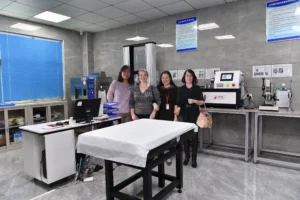
Guangdong Hershey Spring Industrial Co., Ltd. serves as exactly this type of comprehensive manufacturing partner. To better support the massive volume and precision requirements of global OEMs, we have recently relocated to a new, state-of-the-art facility equipped with 50 high-precision CNC machines. This massive upgrade in production capacity guarantees stable batch consistency and reliable lead times across our core product matrix, which strictly includes:
- Precision Springs
- Metal Clips & Contacts
- Precision Stamping Components
- Precision Welding Assemblies
- Elastic Structural Components
By maintaining direct, in-house control over the entire CNC coiling and quality inspection process, we ensure that whether you specify high-carbon music wire or 17-7 PH stainless steel, your custom tension springs will perform flawlessly from the first prototype to the millionth production unit.
Conclusion
The debate between stainless steel and carbon steel for extension springs is not a matter of which material is universally better, but rather which is engineered for your specific operating environment. Carbon steel provides the ultimate tensile strength, high fatigue limits, and cost-efficiency required for protected, high-cycle industrial mechanisms. Conversely, stainless steel is absolutely essential for applications requiring long-term resilience against moisture, chemicals, and outdoor exposure. Ultimately, securing the right material and an optimized hook design requires the expertise of a verified manufacturing partner.
Are you unsure which material will provide the best lifecycle value for your mechanical assembly?
Contact the engineering team at Guangdong Hershey Spring Industrial Co., Ltd. today. Send us your application requirements, and we will provide professional material selection support, design optimization, custom prototypes, and a comprehensive mass production quotation tailored to your exact OEM specifications.
Frequently Asked Questions (FAQ)
What is the main difference between carbon steel and stainless steel extension springs?
Carbon steel offers higher tensile strength and is more cost-effective, making it ideal for heavy-duty, indoor applications. Stainless steel contains chromium, providing inherent corrosion resistance necessary for outdoor, marine, or medical environments where rust prevention is critical.
Will carbon steel extension springs rust?
Yes. Carbon steel lacks natural corrosion resistance. If exposed to moisture or high humidity without a protective surface treatment—such as zinc plating, e-coating, or oiling—carbon steel extension springs will rust and eventually fail.
Can stainless steel extension springs handle high tension loads?
Yes, but standard austenitic stainless steels (like 304) have a slightly lower tensile strength than high-carbon steel. If high tension and extreme corrosion resistance are both required, a custom extension spring manufacturer will recommend precipitation-hardening alloys like 17-7 PH.
What is initial tension in a custom extension spring?
Initial tension is the internal force wound into the spring during the CNC coiling process. It keeps the coils tightly closed and dictates the minimum amount of force required to start stretching the spring. Material selection directly impacts the maximum initial tension a spring can hold.
Why do extension springs often break at the hooks?
Hooks and loops are the weakest points of an extension spring because they are subjected to concentrated bending and torsional stresses. An engineered tension spring design mitigates this by optimizing the bend radius and selecting a fatigue-resistant material appropriate for the load.
How does a custom spring manufacturer ensure batch consistency?
Reliable tension spring manufacturers utilize advanced multi-axis CNC forming machines equipped with optical lasers and in-line load testers. These systems continuously monitor the physical dimensions and pulling force of the springs in real-time, instantly rejecting any units that deviate from the strict engineering tolerances.