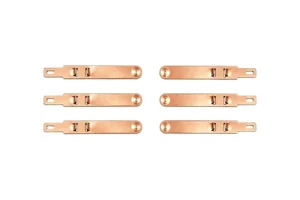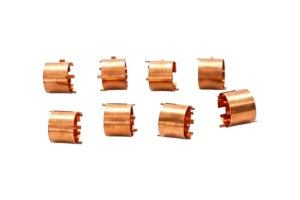
A spring clip looks simple, and that is exactly why teams get burned. The part that holds a battery, a sensor, or a board edge lives through millions of cycles, heat, and vibration — and the difference between “survives” and “fails in the field” is almost always made before the clip is stamped, inside the supplier’s process. This guide gives you ten checks to separate a precision spring-clip supplier from a commodity stamping shop, plus a scorecard you can use the next time you shortlist. The aim is to help you pick a partner who catches the risk before tooling, not after a recall. Our complete clip guide explains the clip families these checks apply to.
Table of Contents
- 1. The 10 Checks That Define a Precision Clip Supplier
- 2. Scorecard: What to Ask, What “Good” Looks Like
- 3. Shortcuts That Come Back to Bite You
- 4. How a Qualified Supplier Runs Your Program
- 5. Where HERSHEY Meets These Checks
- 6. How to Start a Shortlist and an RFQ
1. The 10 Checks That Define a Precision Clip Supplier
Run every candidate through these ten. A shop that passes eight or more is worth a prototype; one that fails half is a risk you will pay for later.
- Material control. Do they stock and certify beryllium copper, phosphor bronze, and stainless — and trace every lot? Clips live or die on alloy.
- Process breadth. Stamping, spring forming, and plating under one roof means fewer hand-offs and one accountable owner.
- Spring-force capability. Can they hold and measure the contact force your design needs, not just the shape?
- Precision. Ask the real number. ±0.01 mm to ±0.05 mm separates a precision house from a job shop.
- In-house plating. Selective gold or silver only where the signal travels cuts cost and stops plating drift.
- Certifications. IATF 16949 for automotive, ISO 13485 for medical — the certs match your industry, not just ISO 9001.
- Reliability testing. Do they cycle-test, salt-spray, and load-test, or just ship what looks right?
- DFM review. A good supplier flags risky features on your drawing before tooling, not after.
- Prototyping path. First-article samples with a report, fast, so you prove the design early.
- Volume maturity. Can they scale from 100 pieces to a million without re-quoting the process?
2. Scorecard: What to Ask, What “Good” Looks Like
Use this table on your next supplier call. Fill the “their answer” column as you talk.
| Check | What to ask | Pass means |
|---|---|---|
| Material | “Which alloys do you certify?” | BeCu, phosphor bronze, stainless, lot trace |
| Force | “Can you measure spring force?” | Yes, on every lot |
| Precision | “What tolerance do you hold?” | ±0.01 to ±0.05 mm |
| Plating | “Selective plating in-house?” | Yes, Au/Ag local |
| Testing | “What reliability tests do you run?” | Cycle, salt spray, load |
| DFM | “Do you review drawings first?” | Yes, before tooling |
3. Shortcuts That Come Back to Bite You
Three shortcuts look like savings and turn into field failures:
- Wrong alloy to save cost. Mild steel relaxes and the clip loosens; the “saving” vanishes in warranty.
- No plating control. Inconsistent finish grows resistance and corrosion exactly where the signal lives.
- No reliability test. A clip that passes on the bench can still fail at a million cycles; only testing proves it.
If you want the deeper evaluation method, our piece on how to choose a precision contact stamping manufacturer goes further on auditing a shop.
4. How a Qualified Supplier Runs Your Program
A trustworthy program follows one path: DFM review of your drawing, prototype with a measured first-article report, validation against your duty cycle, then volume with locked process and lot testing. Notice the review comes first. That is the step that prevents paying for tooling twice.
The path also tells you who owns the risk. When stamping, forming, plating, and testing sit in one house, one team answers when something drifts. When they are split across vendors, the blame splits too — and so does your timeline.
5. Where HERSHEY Meets These Checks
We are not the biggest name in clips, and we will not claim to be. What we can show is a program that passes the ten checks above: 20+ years building precision elastic parts, IATF 16949 and ISO 13485 among our certs, 100+ automated machines and in-house stamping, spring forming, and selective plating. We certify beryllium copper and phosphor bronze by lot, hold ±0.01 mm, and run cycle, salt-spray, and load tests in our own lab. For clips that must survive vibration, our metal vs spring clip guide under vibration shows where we point customers first.
The point is not “pick us.” The point is: ask every candidate these ten questions, and the right partner becomes obvious. If we pass yours, we would be glad to prove it with samples.
6. How to Start a Shortlist and an RFQ
Send the same packet to three or four candidates: the drawing, the duty cycle (force, cycles, temperature, vibration), the volume, and the finish. Score them on the table above, then ask the top two for first-article samples before you commit tooling. Cost matters, but read it next to reliability — our clip cost and MOQ guide shows what actually drives the price so you can compare quotes fairly.
Get a Quote
Send your drawing and duty cycle and we will return a DFM review, samples, and a quote. Start on our contact page, or use the live chat to talk to an engineer now.
FAQ
How many suppliers should I shortlist?
Three or four. Score them on the ten checks, then ask the top two for first-article samples before tooling.
What certs matter for automotive clips?
IATF 16949 is the one that matters; ISO 9001 alone is not enough for automotive traceability.
Why does in-house plating matter?
It lets selective gold or silver land only where the signal travels, cutting cost and stopping plating drift between vendors.
Should I ask for spring-force data?
Yes. A clip’s shape is useless if the force drifts; a qualified supplier measures force on every lot.
How do I avoid paying for tooling twice?
Insist on a DFM review before tooling, then first-article samples, so design risks surface before the steel is cut.
Can one supplier handle prototype to volume?
The best ones do, on the same lines, so the process that passed validation is the one that ships at volume.