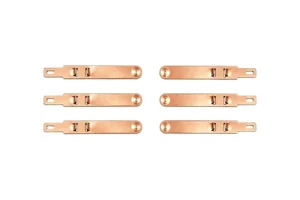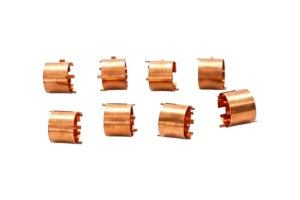
Why This Comparison Matters
A clip that holds perfectly on the bench can fail within months inside a running machine. The difference is almost always vibration. In EV battery packs, servo motors, and rail equipment, constant micro-movement works joints loose, grows contact resistance, and eventually breaks the electrical or mechanical path. This comparison looks at the two most common stamped options — the plain metal clip and the spring clip — and shows which one actually survives a high-vibration life. For the bigger picture on clip types and sourcing, see our complete metal and spring clip guide.
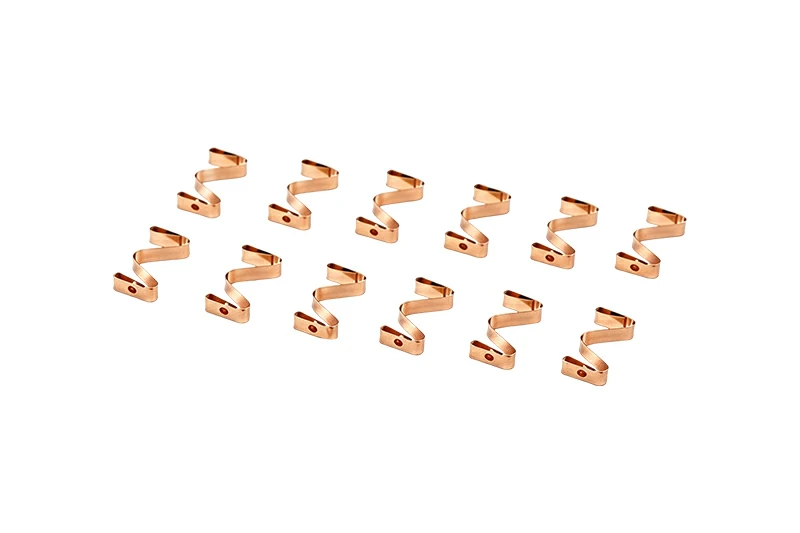
Table of Contents
- 1. Why Vibration Changes the Rules for Clips
- 2. How Each Clip Type Behaves Under Vibration
- 3. Failure Modes: Fretting, Loosening, and Relaxation
- 4. Side-by-Side: Metal Clip vs Spring Clip in Vibration
- 5. When a Metal Clip Is Still the Right Call
- 6. How to Specify a Vibration-Resistant Clip
1. Why Vibration Changes the Rules for Clips
At rest, a metal clip relies on its shape. It presses into a groove or snaps over a lip, and the fit holds the part. That works until the assembly starts to shake. Vibration adds tiny, repeated relative motion between the clip and the part it holds. Over millions of cycles that micro-motion does real damage — and the damage is different from a one-time overload.
A spring clip behaves differently from the start. It is not held only by shape; it pushes back with elastic force. That force keeps the joint loaded even when the parts shift, so the clip stays in contact instead of rattling free.
2. How Each Clip Type Behaves Under Vibration
A plain metal clip holds through interference fit. Under vibration it can lose that fit in two ways: the part drifts and the clip no longer grips, or the clip itself walks out of its seat. Once the fit is gone, the joint is loose and the damage accelerates.
A spring clip converts vibration into a small change in deflection, not a loss of grip. Because it stores energy, it follows the moving part and keeps force on it. For a battery locking clip or an anti-vibration lock, that constant pressure is exactly what stops fretting before it starts. When the joint must stay reliable through movement, the spring clip vs retaining ring question is worth a look, since both aim at staying put under load.
3. Failure Modes: Fretting, Loosening, and Relaxation
Three failure modes decide the outcome in vibration duty:
- Fretting. Micro-slip wears the contact surface and grows resistance. In a current-carrying clip this shows up as heat and intermittent dropouts.
- Loosening. The clip walks out of seat and the part loses its retainment. Common with plain metal clips in high-cycle joints.
- Stress relaxation. The clip slowly loses force over time and temperature, so even a spring clip can loosen if the material is wrong.
Material choice decides the third one. Beryllium copper and phosphor bronze hold their force far better than mild steel, which is why spring contacts for signal and power duty use those alloys. Material is also the heart of the high-fatigue spring clip selection we cover separately.
4. Side-by-Side: Metal Clip vs Spring Clip in Vibration
Use this table as a quick decision aid:
| Factor | Metal clip | Spring clip |
|---|---|---|
| Hold mechanism | Shape and fit | Elastic force |
| Vibration response | Can loosen and walk out | Follows motion, stays loaded |
| Fretting resistance | Lower | Higher |
| Force over time | Stable if seated | Depends on material relaxation |
| Typical cost | Lower at volume | Slightly higher (material + heat treat) |
5. When a Metal Clip Is Still the Right Call
A spring clip is not always the answer. If the joint is static, the part never moves, and the environment is mild, a plain metal clip is cheaper and perfectly reliable. Wire routing clips, static board mounts, and low-cycle latches are good examples. Spend the spring clip where motion, current, or temperature actually threaten the joint.
6. How to Specify a Vibration-Resistant Clip
When the joint will see real vibration, spec it like this:
- State the vibration profile — frequency, amplitude, expected cycles.
- Pick the family — spring clip if the part moves or carries current.
- Pick the material — beryllium copper or phosphor bronze for force retention.
- Match the finish — gold or silver for low contact resistance, Dacromet or zinc-aluminum for corrosion.
- Confirm install force in prototyping so the clip is not over-deflected at assembly.
Send the duty cycle with your drawing and a good supplier will flag the risky features before tooling. That review is what turns a clip that “should work” into one that survives the field.
Get a Quote
Tell us your vibration profile, material, and volume and we will return a quote with samples and lead time. Start on our contact page, or use the live chat to talk to an engineer now.
FAQ
Do metal clips fail faster than spring clips under vibration?
In moving joints, yes. A metal clip holds by fit and can walk out of seat, while a spring clip keeps elastic force on the joint and follows the motion.
Which material best resists vibration loosening?
Beryllium copper and phosphor bronze hold their spring force far better than mild steel, so they resist stress relaxation in high-cycle joints.
Can a spring clip still loosen over time?
Yes, if the material relaxes under heat or the clip is over-deflected at assembly. Spec the right alloy and confirm install force in prototyping.
What finish helps a vibrating contact clip?
Gold or silver plating keeps contact resistance low; for corrosion-heavy environments, Dacromet or zinc-aluminum coatings extend life.
Are anti-vibration clips a separate product?
They are spring clips designed to keep constant pressure under motion — battery locking clips and anti-vibration locks are common forms.
Can you make clips to my vibration spec?
Yes. Send the vibration profile, material, and volume and we will propose the family, alloy, and finish, then build first-article samples.