Why This Comparison Matters
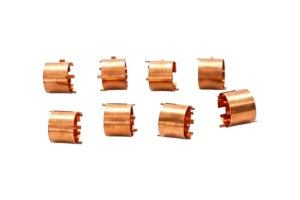
Buyers often use “contact” and “connector” as if they mean the same part. They do not, and the confusion leads to wrong quotes and mismatched assemblies. A contact is the tiny conductive element that actually touches the mating part; a connector is the housing plus contacts plus locks that join two halves of a circuit. This comparison shows how each performs and where each belongs, so you can spec the right one. For the full clip and contact family, see our metal and spring clip guide.
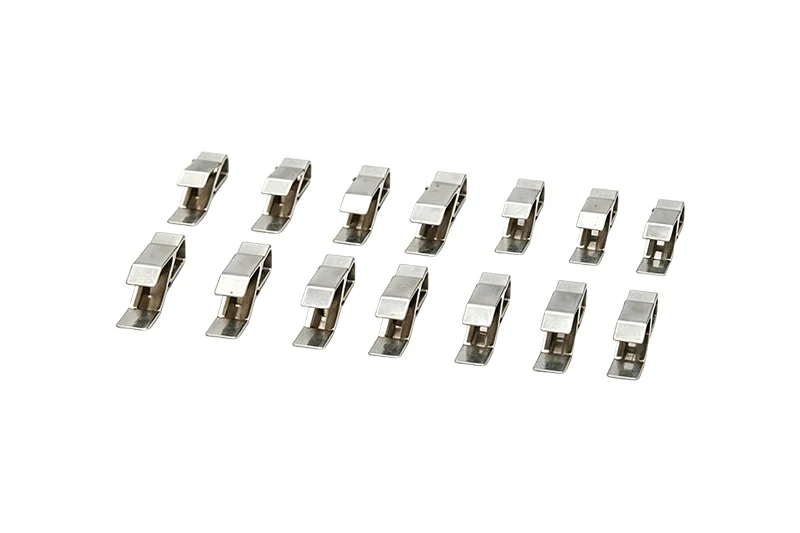
Table of Contents
- 1. Contact vs Connector: The Difference in One Line
- 2. How Each Carries Current
- 3. Signal Integrity and Resistance
- 4. Where Each Is Used
- 5. Side-by-Side: Contact vs Connector
- 6. How to Specify the Right One
1. Contact vs Connector: The Difference in One Line
The contact is the metal that carries the current; the connector is the assembly that holds contacts in place and protects the join. You almost never buy “a contact” alone for a finished product — you buy contacts to press into a connector, or you buy a connector that already contains them.
2. How Each Carries Current
A contact carries current through its own cross-section and its spring force. A well-designed contact (often beryllium copper or phosphor bronze with gold or silver plating) keeps low, stable resistance even after many mate cycles. The connector adds the mechanical structure: polarization, locking, strain relief, and environmental sealing. Current capability is set by the contact; reliability in the field is set by the connector around it.
For EV and battery busbars the numbers are real: precision contact elements in AI server power units can carry continuous current up to 300A. The element does the work; the connector keeps it mated. When sourcing those elements, our EV and battery contact supplier list is a practical starting point.
3. Signal Integrity and Resistance
For signal lines, contact resistance and stability decide the outcome. A loose or dirty contact adds noise and dropouts; a spring contact with constant force keeps the link clean. A connector helps by shielding and by holding the contact at the right mating force, but it cannot fix a poor contact inside it. This is also why spring contacts beat flat contacts for stable signal transmission.
- Contact decides: resistance, cycle life, current rating.
- Connector decides: mating force, sealing, polarization, ease of assembly.
4. Where Each Is Used
Contacts appear wherever a tiny, repeatable metal-to-metal join matters: relay blades, connector pins, busbar terminals, and charging-gun tips. Connectors appear wherever two cable or board halves must join and stay joined through vibration, moisture, and handling — wire harnesses, module interfaces, and field-serviceable links.
5. Side-by-Side: Contact vs Connector
A performance scorecard:
| Factor | Electrical contact | Connector |
|---|---|---|
| Carries current | Yes (the element) | Via its contacts |
| Sets resistance | Yes | No (depends on contact) |
| Provides sealing | No | Yes |
| Provides polarization / lock | No | Yes |
| Bought as | Element or strip | Assembly |
6. How to Specify the Right One
Spec the contact first: material (berllium copper / phosphor bronze / stainless), plating (gold, silver, tin, nickel), current, and cycle life. Then spec the connector around it: lock type, seal rating, and pitch. If you only need the conductive element pressed into your own housing, you are buying contacts. If you need a finished, field-mateable join, you are buying connectors.
Get a Quote
Send your current, cycle life, and environment and we will propose the contact material, plating, and a connector path. Start on our contact page, or use the live chat to talk to an engineer now.
FAQ
Is a contact the same as a connector?
No. The contact is the conductive element that carries current; the connector is the housing that holds contacts and protects the join.
Which sets the current rating?
The contact. Its cross-section, material, and plating decide current and resistance; the connector only holds it in place.
Why use a spring contact inside a connector?
The spring force keeps constant mating pressure, so resistance stays low and stable across many cycles — better signal and fewer dropouts.
What plating is best for contacts?
Gold or silver for low resistance and signal stability; tin for solderability; nickel for corrosion. Match the plating to the duty.
Can you supply loose contacts or only connectors?
We supply precision contact elements and terminals, including busbar and connector contacts, and can support the connector path around them.
How much current can a contact carry?
It depends on size and material, but precision busbar contact elements in server power units can run continuous current up to 300A. Send your spec for a firm number.