A spring manufacturer’s guide to material selection, engineering properties, standards, and cost.
Quick Answer
- Choose music wire for dry environments, high-stress spring designs, and cost-sensitive applications where high tensile strength matters.
- Choose stainless steel for springs exposed to moisture or corrosive chemicals, applications requiring low magnetic response, or service at elevated temperatures. Select the grade based on the actual conditions.
- When both options seem suitable, compare fatigue life, corrosion protection, spring rate, and total operating cost. Stainless steel costs more upfront, but music wire can cost more over its service life if corrosion protection or frequent replacement is required.
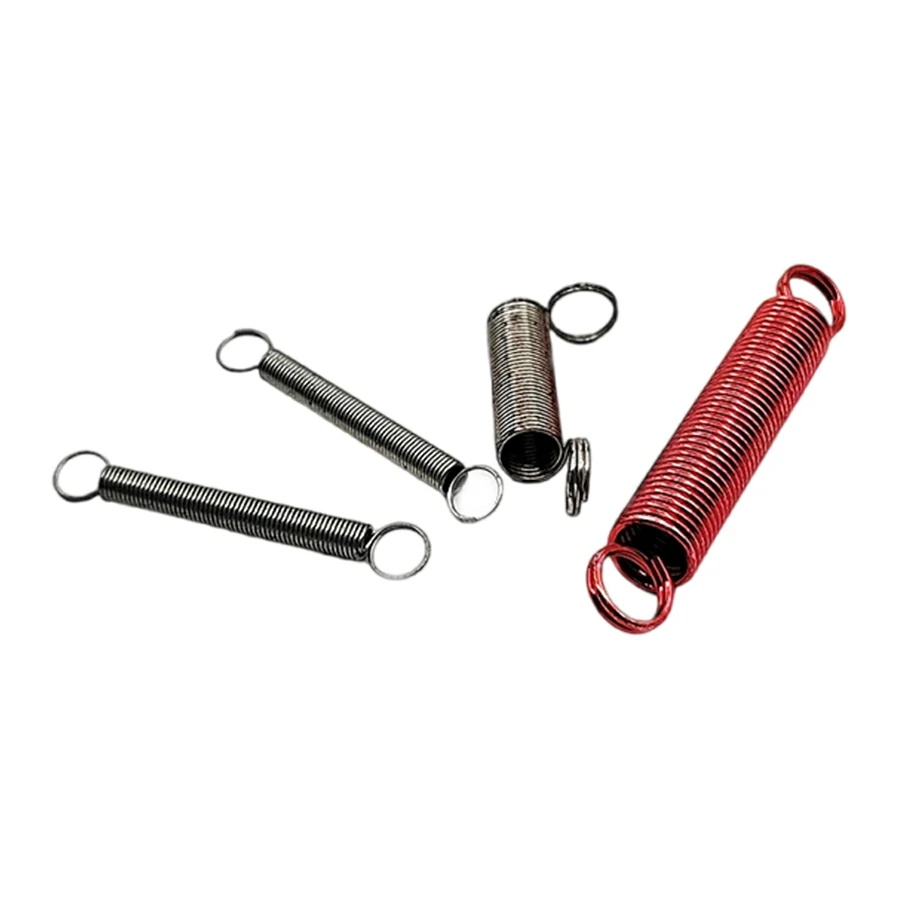
Music wire and stainless steel serve different spring applications. Music wire offers high tensile strength at a relatively low cost, but it corrodes readily. Stainless steel resists corrosion, although its strength, stiffness, temperature capability, and magnetic behavior vary by grade. The right choice depends on where the spring operates, how often it cycles, how much force it must deliver, and how long it must last.
The 30-Second Comparison
| Property | Music Wire | Stainless Steel Spring Wire |
|---|---|---|
| Common standards | ASTM A228; JIS G3522 SWP-B; EN 10270-1 DH | ASTM A313; EN 10270-3, including grades such as 1.4310 and 1.4568 |
| Tensile strength | Can exceed 400,000 psi in small diameters, depending on the specification | Some 302/304 wire conditions fall around 275,000–300,000 psi; some 17-7 PH conditions reach approximately 275,000–325,000 psi |
| Corrosion resistance | Poor without protective measures | Generally good; 316 offers better resistance to chloride-related corrosion than 302/304 |
| Temperature performance | Often used around or below 120°C (250°F), subject to stress and service-life requirements | Some grades can operate at higher temperatures; the limit depends on grade, stress, and exposure time |
| Shear modulus | Approximately 79.3 GPa | Approximately 69–72 GPa for many common grades |
| Magnetic properties | Magnetic | 302/304/316 are generally weakly magnetic or nearly nonmagnetic in suitable conditions; cold working can increase magnetism. 17-7 PH may be magnetic. |
| Material cost | Generally lower | Generally higher, depending on grade and supply conditions |
Note: These figures are screening values, not guaranteed design limits. Tensile strength varies with wire diameter and material condition. Temperature capability depends on applied stress, exposure time, and allowable stress relaxation. Confirm the actual properties with the wire supplier before finalizing the spring design.
What Exactly Are These Two Materials?
Music Wire: High-Carbon Spring Steel Wire
Music wire is high-carbon steel wire manufactured for spring applications. Controlled heat treatment and wire drawing give it high tensile strength and consistent dimensions. ASTM A228 is a widely used specification for music spring wire.
Manufacturers use music wire for compression, extension, and torsion springs that need high strength without high material costs. Its main limitation is corrosion. In humid environments or applications exposed to water and chemicals, the wire may need a protective finish—or a different material altogether.
Music wire is a common material name, not a universal standard designation. ASTM A228, JIS G3522 SWP-B, and EN 10270-1 DH belong to different standards systems. They may serve similar applications, but their requirements are not automatically interchangeable. Specify the required standard and grade in the drawing or purchase order.
Stainless Steel Spring Wire
Stainless steel spring wire includes several grades with different strengths, corrosion resistance, and magnetic properties. Choosing a spring by the label “stainless steel” alone leaves important requirements undefined.
- 302/304: Common choices for general-purpose corrosion-resistant springs. Their strength and magnetic response depend on the wire condition and amount of cold work.
- 316: Contains molybdenum, which improves resistance to chloride-related pitting and crevice corrosion compared with 302/304. It can still corrode in aggressive seawater or chemical environments.
- 17-7 PH: A precipitation-hardening stainless steel used when the design needs a different balance of strength, spring performance, and corrosion resistance. Its properties depend on the specified heat-treatment condition.
Stainless steel is worth considering when a spring will encounter moisture, cleaning fluids, or corrosive contaminants. It can also reduce the need for protective coatings. However, the grade must match the application; stainless steel is not automatically stronger, stiffer, or longer-lasting than music wire.
Standard Cross-Reference Table
Use this table to identify the relevant standards and common search terms when reviewing a drawing or requesting a quotation. It is a cross-reference starting point, not a statement of material equivalence.
| Material | ASTM Reference | JIS Common Spring-Wire Reference | EN Reference |
|---|---|---|---|
| Music wire | ASTM A228 | JIS G3522 SWP-B | EN 10270-1 DH |
| 302/304 stainless spring wire | ASTM A313, Type 302/304 and applicable requirements | SUS304-WPB (common spring-wire grade; confirm product specification) | EN 10270-3; 1.4310 is a common spring-wire grade |
| 316 stainless spring wire | ASTM A313, Type 316 and applicable requirements | SUS316-WPA (common reference; confirm product specification) | 1.4401 identifies a common 316 composition; verify the applicable product specification |
| 17-7 PH stainless steel | ASTM A313, Type 631 where applicable | SUS631-WPB (common reference; confirm exact grade and condition) | 1.4568 |
How to use this table: The JIS grades shown are common spring-wire references for search and preliminary sourcing. They are not proof that two wires are interchangeable. Different standards may specify different chemical compositions, tensile-strength ranges, delivery conditions, surface requirements, heat-treatment conditions, and test methods.
Before approving a substitution, confirm the latest applicable standard, the supplier’s material certificate, wire diameter, tensile-strength range, surface condition, heat-treatment requirement, and finished-spring performance. Recalculate spring rate, load, deflection, stress, and fatigue life where the material change affects design outputs.
Performance Comparison by Engineering Dimension
Strength and Load Capacity
Music wire generally provides higher tensile strength than common 302/304 stainless spring wire at comparable small diameters and specified conditions. Some small-diameter music wire exceeds 400,000 psi. Common 302/304 wire conditions may fall around 275,000–300,000 psi, while some 17-7 PH conditions reach approximately 275,000–325,000 psi.
These figures vary with diameter, grade, and processing condition. Use the actual supplier data for calculations.
Music wire is often a good fit for compact springs that must withstand high stress. But tensile strength alone does not determine the force a spring produces.
For a helical compression spring, the approximate spring rate is:
k = Gd⁴ / (8D³N)
- k: Spring rate
- G: Shear modulus
- d: Wire diameter
- D: Mean coil diameter
- N: Number of active coils
Wire diameter has a fourth-power effect on spring rate, while mean coil diameter has a third-power effect in the opposite direction. Material strength determines how much stress the spring can withstand; shear modulus and geometry determine its rate.
Designers must also check working deflection, stress, solid height, permanent deformation, and fatigue life before approving the maximum load.
Fatigue Life and Cycle Performance
For a dry, high-cycle application, music wire is often a strong candidate. Its high tensile strength makes it useful in springs that repeatedly compress, extend, or twist, provided the design stress and manufacturing quality are controlled.
Corrosion can change the result. Pits and surface damage create local stress concentrations that can initiate fatigue cracks. A music wire spring that performs well in a clean indoor assembly may fail much earlier if exposed to moisture or corrosive chemicals.
In these conditions, stainless steel may deliver a longer service life—not necessarily because its intrinsic fatigue strength is higher, but because it better resists the corrosion that accelerates fatigue failure.
Compare fatigue performance under actual operating conditions. Account for stress range, cycle count, surface finish, corrosion exposure, temperature, and the consequences of failure. For critical springs, use engineering calculations and representative fatigue testing rather than relying on material labels.
Corrosion Resistance
Corrosion resistance is often the deciding factor between music wire and stainless steel.
- Music wire: Best suited to dry environments unless an appropriate protective system is specified.
- 302/304 stainless steel: Suitable for many indoor, humid, and mildly corrosive environments.
- 316 stainless steel: Often preferred when chloride exposure makes pitting or crevice corrosion a concern.
For example, a music wire spring inside a dry mechanical enclosure may need no additional corrosion protection. The same spring in a frequently washed machine could require a coating or a switch to stainless steel.
Even 316 can corrode in aggressive chloride environments. Consider chemical concentration, temperature, deposits, crevices, and cleaning procedures before selecting a grade.
Coating music wire adds another set of requirements. Plating can increase finished dimensions and affect fit. Some coating processes can also create hydrogen embrittlement risks in high-strength steel if process controls are inadequate. Include coating thickness, process requirements, and fatigue performance in the design review.
Temperature Performance
Music wire is commonly used at moderate temperatures. As temperature rises, stress relaxation can reduce the force a spring maintains over time. Around 120°C (250°F) can serve as an initial screening point for some applications, but it is not a universal maximum.
Some stainless steel grades can operate at higher temperatures. Their usable limits depend on alloy, heat treatment, applied stress, exposure time, and the amount of load loss the application can tolerate. A figure such as 288°C (550°F) should not be treated as a continuous-service rating for every stainless steel spring.
Above approximately 250°C (482°F), review the material choice against the actual duty cycle and required spring force. A suitable precipitation-hardening stainless steel may work in some applications. More demanding combinations of temperature, stress, and oxidation may require a nickel-based alloy such as Inconel.
Check stress relaxation, oxidation, corrosion, fatigue, and retained load at operating temperature. A spring that survives a short heat exposure may still lose too much force during prolonged service.
Stiffness and Shear Modulus
Music wire typically has a shear modulus of about 79.3 GPa. Many common stainless steel spring wires fall around 69–72 GPa.
With the same wire diameter, coil diameter, and number of active coils, a stainless steel spring will generally have a lower spring rate than a comparable music wire spring.
That difference matters when replacing a material without changing the design. If the original music wire spring must deliver a specified force at a fixed deflection, a stainless steel replacement may fall short.
Designers can compensate by changing wire diameter, coil diameter, or active coil count, subject to packaging and stress limits.
Before changing materials, recalculate spring rate, working load, deflection, solid height, and stress. Confirm that the revised spring meets the original requirements.
Magnetic Properties
Music wire is magnetic because it is a carbon steel. This is usually acceptable for mechanical applications, but it can cause problems near magnetic sensors or instruments.
Annealed 302, 304, and 316 stainless steels are generally weakly magnetic or nearly nonmagnetic. Cold working during wire drawing and spring forming can increase their magnetic response, so the finished spring may behave differently from the starting material.
17-7 PH can also exhibit magnetic behavior, depending on its processing and heat-treatment condition. Do not assume that every stainless steel spring is nonmagnetic.
For medical equipment, precision instruments, or electronics with magnetic limits, specify the acceptable magnetic response and verify the finished component. If low magnetism is critical, evaluate the full manufacturing process as well as the alloy.
Cost and Total Cost of Ownership
Music wire generally costs less than stainless steel spring wire. In a dry, high-volume application, that price advantage can make it the economical choice.
The calculation changes when corrosion protection or frequent replacement is necessary. Coatings, inspection, maintenance, and downtime can outweigh the initial material savings.
Stainless steel usually costs more upfront, but it may eliminate the need for a separate protective finish and reduce corrosion-related failures. Whether that saves money depends on the environment, grade, and required service life.
Compare these costs:
- Wire material and spring manufacturing
- Plating, coating, finishing, and inspection
- Expected fatigue life and corrosion-related failure risk
- Maintenance and replacement labor
- Downtime and the consequences of spring failure
- Testing, certification, and traceability
For a dry spring that is inexpensive to replace, music wire may be the clear choice. For a spring inside a corrosive process line where failure stops production, stainless steel may cost less over the equipment’s service life.
How to Decide
Choose Music Wire If:
- The spring operates in a dry, controlled environment.
- High tensile strength and repeated loading are key requirements.
- The design needs high stress capacity within limited space.
- Material cost is a major constraint.
- A protective coating is unnecessary or can be applied without unacceptable dimensional or fatigue penalties.
- The operating temperature and stress are within the verified limits for the selected wire.
Choose Stainless Steel If:
- The spring encounters moisture, cleaning fluids, or corrosive chemicals.
- Corrosion could shorten fatigue life or cause an expensive failure.
- The application has a defined low-magnetic-response requirement and the selected grade meets it.
- The operating temperature requires a grade with suitable elevated-temperature properties.
- Coating maintenance or corrosion protection would add too much cost or complexity.
- The application has material, cleanliness, or traceability requirements that the selected grade and manufacturing process can meet.
When the Choice Requires More Analysis
- Corrosion and high cycle count: Compare 316 and 17-7 PH against the actual chemical exposure, stress, and required service life. They are not interchangeable.
- High temperature and high stress: Verify the stainless grade and heat-treatment condition. Consider a nickel-based alloy if the application exceeds their validated capability.
- Low cost and moderate moisture: Compare coated music wire with 302/304 stainless steel using finished-part cost and expected replacement frequency.
- Strict magnetic limits: Set a measurable acceptance limit and test the finished spring.
- Material substitution: Recalculate spring rate, load, deflection, stress, and fatigue life before releasing the revised design.
Before requesting a quotation, define the spring type, working load, deflection, operating temperature, environmental exposure, target cycle life, and available installation space. These details help a manufacturer recommend a material that meets the actual requirements rather than simply matching the original material name.
Common Misconceptions
“Stainless Steel Is Always Better.”
Not necessarily. Stainless steel is usually preferable when corrosion resistance matters. In a dry, high-cycle application, music wire may provide the required strength at a lower cost.
“Stainless Steel Cannot Corrode.”
It can. Chlorides, crevices, chemical exposure, and deposits can cause localized corrosion. Grade 316 improves resistance to chloride-related attack but is not immune to seawater corrosion.
“A Material Change Does Not Affect the Design.”
It can change the spring’s performance. A different shear modulus changes spring rate. Strength, stress relaxation, corrosion behavior, and fatigue life may also differ. Recheck the design before approving a substitution.
“Higher Tensile Strength Means a Stiffer Spring.”
These are different properties. Tensile strength describes resistance to tensile failure under specified conditions. Spring rate depends primarily on shear modulus and geometry. A stronger wire does not automatically produce more force at the same deflection.
Frequently Asked Questions
Is music wire stronger than stainless steel?
Music wire generally has higher tensile strength than common 302/304 stainless spring wire at comparable small diameters and specified conditions. Some stainless grades and processing conditions offer different strength levels, so compare the actual material specifications rather than treating all stainless steel as one category.
Can music wire replace stainless steel in a spring?
Yes, if the application does not depend on stainless steel’s corrosion resistance or other grade-specific properties. Music wire can be a cost-effective replacement in a dry environment. It is usually unsuitable as a direct substitute where moisture or corrosive chemicals would cause premature failure. Recalculate and test the spring before making the change.
Does stainless steel make a softer spring?
For the same helical spring geometry, common stainless steel spring wire generally produces a lower spring rate than music wire because its shear modulus is lower. Designers can compensate by adjusting wire diameter, coil diameter, or active coil count, provided stress and space requirements remain acceptable.
Which material is better for high-temperature springs?
It depends on the operating temperature, applied stress, and required service life. Certain stainless steel grades can outperform conventional music wire at elevated temperatures. For more demanding conditions, a suitable precipitation-hardening stainless steel or nickel-based alloy such as Inconel may be necessary. Confirm retained load and stress-relaxation performance at the actual service temperature.
Is music wire magnetic?
Yes. Music wire is magnetic carbon steel. Some stainless steel grades have a much lower magnetic response, but cold working can increase magnetism in austenitic grades, and 17-7 PH may be magnetic. Verify the finished spring if magnetic performance is a design requirement.
What is the stainless steel equivalent of music wire?
There is no single stainless steel grade that universally replaces ASTM A228 music wire. 302/304 may suit general corrosion-resistant applications, 316 may be preferable for chloride exposure, and 17-7 PH may suit designs requiring a different strength and corrosion-resistance balance. Select the grade using the required tensile strength, spring rate, fatigue life, environment, and temperature. Confirm the product specification before approving an equivalent.
How much does music wire cost compared with stainless steel?
Music wire generally has a lower raw material cost. Stainless steel usually costs more, with the price depending on grade, diameter, order quantity, and supply conditions. Compare finished spring costs, including coatings, inspection, maintenance, replacement frequency, and downtime. Those costs determine whether the lower purchase price translates into savings.
Need Help Selecting Spring Material?
Our spring manufacturing team can review your operating conditions, compare suitable wire grades, and assess material substitutions before production. We can also coordinate incoming-material verification and prototype comparisons where required.
Send us the spring drawing or key specifications, including wire diameter, working load, deflection, operating temperature, environmental exposure, and target cycle life. We can use these details to assess which material best fits your application.
Contact our team to discuss your spring design and material requirements.
Technical note: Standard references and property values are intended for preliminary selection, not as guaranteed design values or proof of equivalence. Confirm the latest applicable standards, supplier material certificates, wire diameter, manufacturing condition, and operating requirements before approving a spring design.