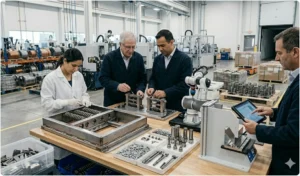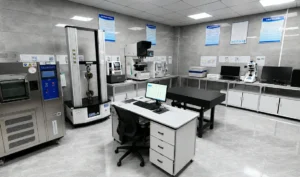
When you need thousands—or millions—of identical metal parts with tight tolerances and a low unit cost, precision metal stamping is almost always the most economical path. For an OEM buyer, the real question is not “can it be stamped?” but “which custom metal stamping supplier can deliver the part, the quality, and the volume my program needs?” This guide explains what precision stamping components are, the processes and materials behind them, the industries they serve, and—most importantly—how to qualify a stamping partner and request a quote.
Table of Contents
- What Are Precision Stamping Components?
- Why Work With a Custom Metal Stamping Supplier?
- Core Stamping Capabilities and Processes
- Materials We Stamp (and How We Select Them)
- Value-Added Processes: Welding, Plating, and Assembly
- Industries We Serve With Precision Stamping
- Quality, Certifications, and Process Control
- How to Evaluate a Precision Metal Stamping Company
- Request a Quote: From Prototype to Production
- Frequently Asked Questions
1. What Are Precision Stamping Components?
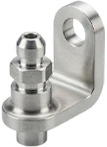
Precision stamping components are metal parts produced by feeding sheet or coil stock through a press fitted with progressive dies. At each stroke of the press, the strip advances and one or more operations—blanking, piercing, bending, forming, drawing—are performed. After the final station, a finished, net-shape part is ejected. Common examples include brackets, enclosures, EMI shielding cages, lead frames, motor stator/rotor core laminations, clips, terminals, and busbars.
Compared with CNC machining, stamping trades setup flexibility for repeatability and cost at scale. Once the tooling is qualified, every part is dimensionally consistent, and the per-part cost falls sharply as volume rises. That is why stamping is the default choice for high-volume electrical, automotive, medical, and electronics hardware.
2. Why Work With a Custom Metal Stamping Supplier?
If you are sourcing for a production program, a custom metal stamping supplier does far more than run a press. A capable partner owns the entire value chain: tool design, material sourcing, stamping, secondary operations (welding, plating, heat treatment), inspection, and assembly. For the OEM buyer, that vertical integration translates into three concrete advantages:
- Lower landed cost. One supplier replaces several, eliminating markups between stamping, plating, and assembly subcontractors.
- Faster time-to-market. In-house tooling and DFM feedback shorten the path from drawing to qualified part.
- Scalability. High-speed, reel-to-reel lines absorb volume swings without re-qualifying new vendors.
In short, the right supplier reduces your vendor count while increasing your control over cost, quality, and lead time. That is the commercial case for sourcing stamping as a managed process rather than a commodity part.
3. Core Stamping Capabilities and Processes
A modern stamping house should be able to speak to the following capabilities—and back them with data:
- Progressive die tooling. Multiple operations in one die, so a complex part is completed in a single press stroke per pitch.
- High-speed stamping. Automatic presses deliver high throughput for volume programs while holding tight tolerances.
- Reel-to-reel stamping. Continuous strip processing—ideal for micro parts, terminals, and automated downstream assembly.
- Flatness control within 0.03 mm. Critical for EMI cages, cold-plate retention frames, and sensor housings where interference is not acceptable.
- Zero-burr / minimal burr. Burr-free edges are mandatory for medical and connectivity applications.
- Process capability Cpk > 1.67. Statistical evidence that the process is stable and centered, not just a one-off good sample.
We handle both heavy-gauge structural stampings (cell-protection brackets, chassis reinforcement) and micro stampings (lead frames, fine-pitch terminals). The choice of process is driven by your geometry, volume, and tolerance—covered in detail in our custom metal stamping services guide.
4. Materials We Stamp (and How We Select Them)
Material choice dictates conductivity, corrosion resistance, spring properties, and weldability. We regularly stamp:
- Stainless Steel 302 / 304 / 17-7
- High-temperature alloys: Inconel, Hastelloy, Elgiloy, MP35N, Monel
- Titanium (medical and aerospace)
- Copper alloys: Brass, Phosphor Bronze, Beryllium Copper
- Spring & tool steels for high-load structural parts
Selecting the right alloy is a design decision, not an afterthought. Conductivity, fatigue life, and biocompatibility each pull the choice in different directions—this is exactly where early supplier involvement (DFM) pays off. Our engineers will recommend and validate the material against your functional requirements before tooling begins.
5. Value-Added Processes: Welding, Plating, and Assembly
The difference between a stamped blank and a finished component is the secondary work. Our one-stop capabilities include:
- Laser welding & precision spot welding with minimal thermal distortion.
- Dissimilar-metal joining—for example, copper contacts welded to stainless or spring-steel bodies.
- Integrated stamping + welding into final assemblies on automated lines.
- Surface treatment: zinc-manganese electroplating, electropolishing for stainless, powder coating (any color), electrophoretic (E-coating), and hot-dip.
- Finishing: grinding, heat treatment, stress relieving, shot peening, vibratory polishing, and load testing.

Consolidating these steps with a single metal stamping supplier removes interface risk—no finger-pointing between a stamper and a plater when a dimension or finish is off.
6. Industries We Serve With Precision Stamping
Stamped components sit inside some of the most demanding products on the market:
- AI servers & data centers. EMI shielding cages and liquid-cooling cold-plate retention frames held to 0.03 mm flatness for clean EMI isolation.
- New energy vehicles (EV). Heavy-gauge cell-protection brackets and chassis reinforcement plates with controlled material thinning for crash-energy absorption.
- High-end medical devices. Cleanroom-processed stainless and titanium internal chassis and miniature brackets with burr-free, passivated finishes.
- Robotics & automation. High-concentricity motor stator/rotor core laminations and sensor housing plates for structural rigidity under rapid cycles.
- UAV / drone systems. Ultra-thin aluminum alloy mainframes and gimbal shells with localized rib embossing for stiffness at minimal weight.
- Power grid & energy storage. Solar-inverter sheet metal and ESS rack enclosures processed with anti-galling dies to prevent stress cracking.

Each industry brings its own compliance and performance bar. For a deeper dive into application-specific design rules and examples, see our precision stamping applications guide.
7. Quality, Certifications, and Process Control
For an OEM, certifications are the first filter when shortlisting a precision metal stamping company. Our system is built on:
- IATF 16949 and ISO 9001 quality management systems
- CNAS-accredited laboratory markings
- REACH and RoHS material compliance
- In-house tensile, flatness, and dimensional inspection; Cpk > 1.67 process monitoring
- A cleanroom line for medical-grade stainless and titanium parts
- A portfolio of utility-model and invention patents covering spring and stamping structures
Quality is not a final inspection gate—it is designed into incoming inspection, in-process SPC, and final verification, so what ships is what was qualified.
8. How to Evaluate a Precision Metal Stamping Company
Before you issue an RFQ, score each candidate against this checklist:
- Certifications match your industry (IATF 16949 for automotive, ISO 13485-aware cleanroom for medical, etc.).
- In-house tooling and die design—you should not be dependent on a third party for the most critical asset.
- Published process-capability data (Cpk > 1.67) rather than vague “high precision” claims.
- Material traceability with REACH/RoHS documentation.
- Value-added integration: welding, plating, and assembly under one roof.
- A clear prototype-to-production path with defined milestones.
- Stated lead time and capacity that fit your program (typical: 3–4 weeks covering tooling, welding, and testing).
Our full, annotated evaluation framework—including the red flags that should disqualify a vendor—is in the precision metal stamping company guide.
9. Request a Quote: From Prototype to Production
A good quote request gives the supplier what it needs to respond accurately. Include:
- 2D/3D drawings with critical tolerances
- Material specification (or let us recommend one)
- Estimated annual volume and batch size
- Required surface treatment / plating
- Target lead time and any certification needs
We offer rapid prototyping so you can verify fit and function before committing to mass production, with typical complex-assembly lead times of 3–4 weeks. Our step-by-step quotation and prototyping playbook is in the precision stamping quote guide. To start a project now, visit our precision stamping components page and submit your requirements.
10. Frequently Asked Questions
What is your typical lead time?
For complex stamped and welded assemblies, lead time is typically 3–4 weeks, covering component fabrication, specialized tooling, welding setup, and comprehensive quality testing.
Can I get a prototype first?
Yes. We provide rapid prototyping so you can verify mechanical performance and fit before mass production.
Can you join different metals?
Yes. We have extensive experience welding dissimilar metals, such as copper contacts to stainless steel or spring-steel components, with localized heat control that protects surrounding material.
Which certifications do you hold?
Our quality system is built on IATF 16949 and ISO 9001, with CNAS-accredited testing, and materials compliant to REACH and RoHS.
HERSHEY (Guangdong HERSHEY Spring Industry Co., Ltd.) is a Dongguan-based precision components manufacturer founded in 2008, operating 100+ automated production lines across spring, stamping, and welding technologies. This guide is part of a content cluster on precision stamping components; explore the sub-guides linked above for deeper, intent-specific detail.