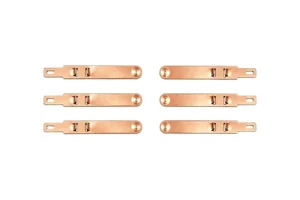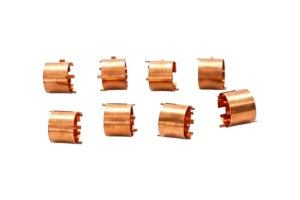
For an OEM sourcing team, “metal stamping” is not one process—it is a family of processes, and the right custom metal stamping services mix depends on your part geometry, annual volume, and tolerance band. Before you issue an RFQ, it helps to understand what a capable supplier should actually offer: which stamping methods fit which parts, what level of precision is realistic, and what information you need to send to get an accurate quote. This guide covers the core processes, the numbers behind them, and how to scope your project.
Table of Contents
- What’s Included in a Custom Metal Stamping Service
- Progressive Die Stamping
- High-Speed Stamping for Volume Programs
- Reel-to-Reel Stamping for Micro Parts
- Tolerances & Process Capability
- Materials We Run
- Secondary & Value-Added Operations
- How to Scope Your Stamping Project
- Frequently Asked Questions
1. What’s Included in a Custom Metal Stamping Service
A full-service custom metal stamping supplier owns the entire value chain rather than just running a press. That typically means tool design and build, material sourcing, stamping, secondary operations (welding, plating, heat treatment), inspection, and final assembly—all under one roof. For the buyer, consolidation means one accountable partner, fewer hand-offs, and no finger-pointing between a stamper and a plater when a dimension or finish is off. Our broader precision stamping components guide frames this in the context of qualifying a stamping partner end to end.
2. Progressive Die Stamping
In progressive die stamping, a strip of sheet or coil stock advances through a single press fitted with a multi-station die. At each stroke, one or more operations—blanking, piercing, bending, forming, drawing—are performed at dedicated stations, and a finished, net-shape part is ejected after the final station. This is the workhorse for complex, high-volume parts such as brackets, terminals, lead frames, EMI shielding cages, and clips.
- Repeatability at scale. Once the tool is qualified, every part is dimensionally identical.
- Lower per-part cost. Handling and setup drop as volume rises.
- Process evidence. A capable supplier backs the tool with Cpk > 1.67 capability studies, not just a good first article.
3. High-Speed Stamping for Volume Programs
When your program runs into the millions of pieces, high-speed stamping on automatic presses delivers the throughput required while holding tight tolerances. The economic case is straightforward: the tooling amortizes across a large run, and the unit cost falls accordingly. The risk to manage is tool wear and strip control—exactly where in-house tooling and SPC monitoring separate a production-grade supplier from a prototype shop.
4. Reel-to-Reel Stamping for Micro Parts
For fine-pitch terminals, contacts, and lead frames, reel-to-reel stamping processes the strip continuously and delivers parts still attached to the carrier for automated downstream assembly. This is ideal when your component feeds directly into a connector or PCB assembly line, because it preserves pitch and orientation and removes a manual handling step. If your part is micro-scale, ask specifically whether the supplier runs reel-to-reel rather than loose-piece stamping.
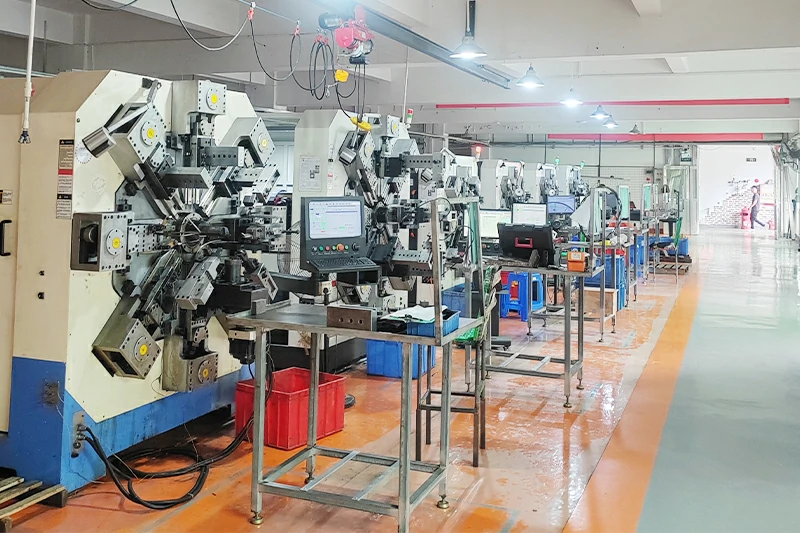
5. Tolerances & Process Capability
The phrases “high precision” and “tight tolerance” mean nothing without numbers. A stamping house you can source from should be able to state its capabilities concretely:
- Flatness control within 0.03 mm—critical for EMI cages, cold-plate retention frames, and sensor housings where interference is unacceptable.
- Zero-burr / minimal-burr edges—mandatory for medical and connectivity applications where a burr causes field failure.
- Process capability Cpk > 1.67—statistical proof the process is stable and centered, not a one-off good sample.
- Controlled material thinning—so bend radii and wall sections stay within spec after forming.
6. Materials We Run
Material choice drives conductivity, corrosion resistance, spring properties, and weldability. A supplier should be fluent across the common stamping alloys:
- Stainless Steel 302 / 304 / 17-7 PH
- High-temperature alloys: Inconel, Hastelloy, Elgiloy, MP35N, Monel
- Titanium (medical and aerospace)
- Copper alloys: Brass, Phosphor Bronze, Beryllium Copper
- Spring & tool steels for high-load structural parts
7. Secondary & Value-Added Operations
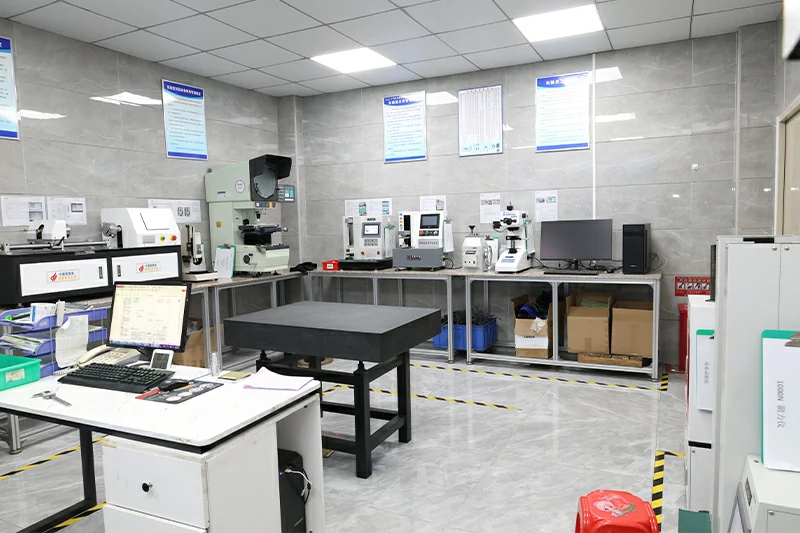
The gap between a stamped blank and a finished component is the secondary work. When these steps sit with the same metal stamping supplier, interface risk disappears. Common value-added operations include:
- Laser welding & precision spot welding with minimal thermal distortion.
- Dissimilar-metal joining—for example, copper contacts welded to stainless or spring-steel bodies.
- Surface treatment: zinc-manganese electroplating, electropolishing for stainless, powder coating (any color), electrophoretic (E-coating), and hot-dip.
- Finishing: grinding, heat treatment, stress relieving, shot peening, vibratory polishing, and load testing.
8. How to Scope Your Stamping Project
A supplier can only quote accurately against a clear brief. Before you send an RFQ, assemble:
- 2D/3D drawings with critical tolerances called out.
- Material specification—or a note asking the supplier to recommend one.
- Estimated annual volume and batch size (drives process and tooling choice).
- Required surface treatment / plating and any cosmetic standard.
- Certification needs (IATF 16949 for automotive, ISO 13485-aware cleanroom for medical, etc.).
- Target lead time and any program milestones.
Early supplier involvement—design for manufacturability (DFM) feedback before tooling begins—is where most cost is saved. Bringing the supplier in at the drawing stage prevents expensive die revisions later.
9. Frequently Asked Questions
What is the smallest feature you can stamp?
It depends on material, thickness, and tolerance. Send your drawing and we will confirm feasibility and recommend process (reel-to-reel micro stamping versus conventional progressive die) during DFM.
Can you support low or pilot volumes?
Yes. We provide rapid prototyping so you can verify fit and function before committing to mass production tooling.
What is your typical lead time?
For complex stamped and welded assemblies, lead time is typically 3–4 weeks, covering component fabrication, specialized tooling, welding setup, and comprehensive quality testing.
HERSHEY (Guangdong HERSHEY Spring Industry Co., Ltd.) is a Dongguan-based precision components manufacturer founded in 2008, operating 100+ automated production lines across spring, stamping, and welding technologies. This article is part of a content cluster on precision stamping components; the pillar guide and the other sub-guides linked from it cover supplier evaluation, industry applications, and requesting a quote. To start a project, visit our precision stamping components page.