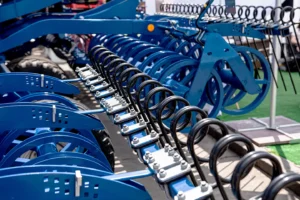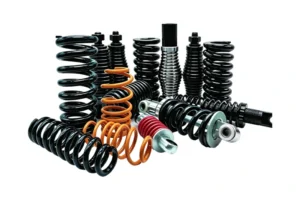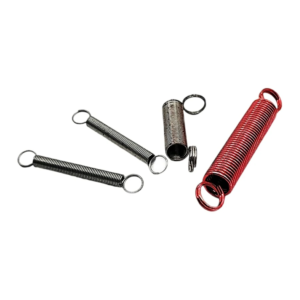
Custom springs for agriculture have to handle conditions that standard industrial springs may not be designed for. Tractors, planters, harvesters, balers, and cultivators expose springs to repeated shock loads, vibration, heavy mechanical forces, dust, moisture, fertilizers, and changing temperatures.
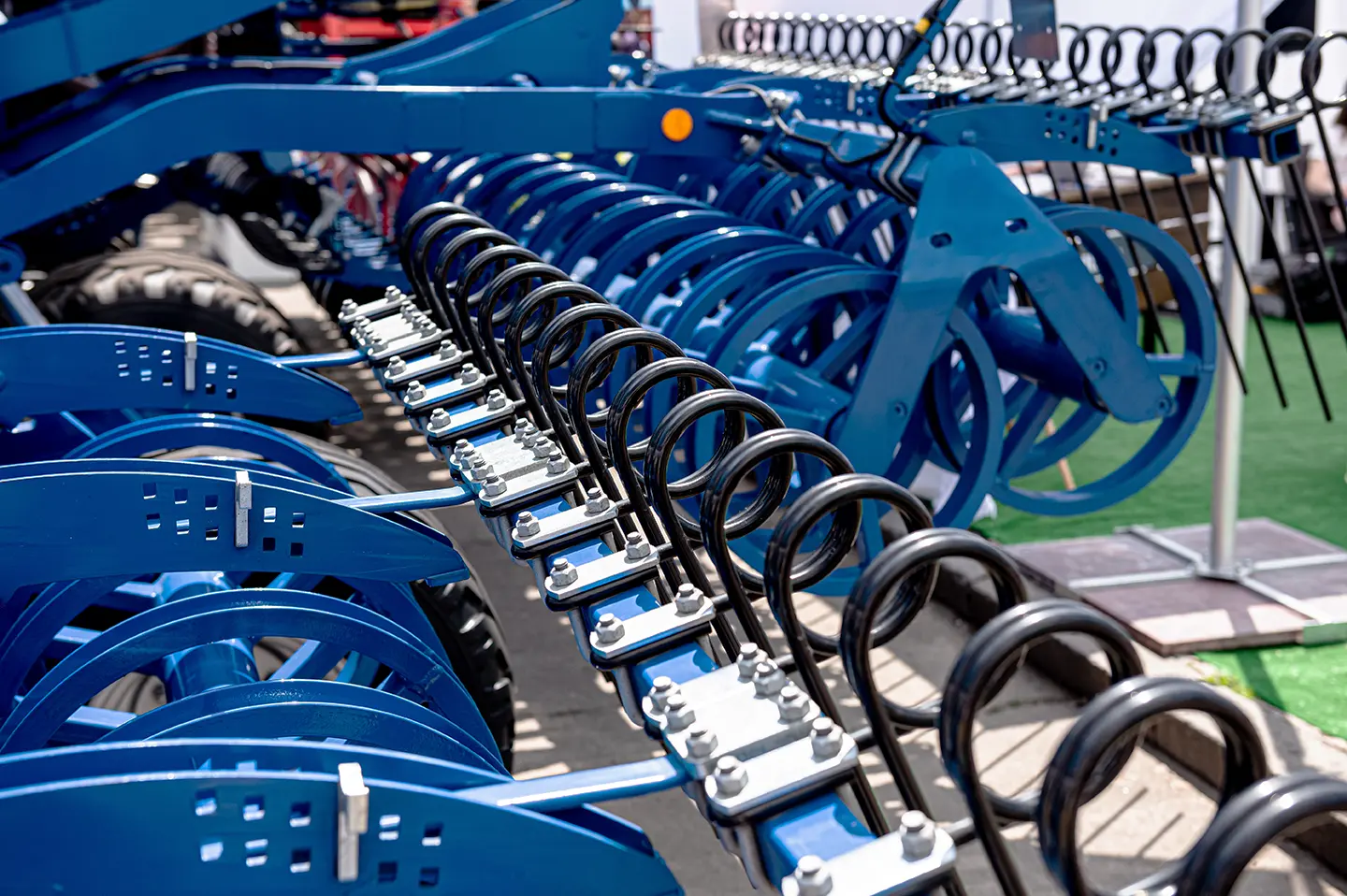
Choosing the right spring starts with its function and operating conditions, not simply the name of the machine. Load requirements, available space, expected service life, material selection, and surface protection all affect performance.
This guide explains how to select custom springs for agricultural equipment, compare spring materials, define manufacturing specifications, and work with an OEM spring manufacturer from an existing drawing or sample.
Why Agricultural Springs Need a Different Design Approach
A spring used in agricultural machinery rarely operates under clean, predictable conditions. It may experience thousands of loading cycles while exposed to soil, water, fertilizer residue, and mechanical impact. Its design must account for these conditions rather than focus on load capacity alone.
Impact, Shock Loads, Vibration, and Long-Cycle Fatigue
Farm machinery frequently operates over uneven ground and through changing working conditions. Springs in tillage equipment, harvesting machinery, and tractor attachments may experience repeated impacts when components encounter rocks, compacted soil, or sudden resistance.
These loads can differ significantly from the steady forces used in basic spring calculations.
Three factors deserve particular attention:
- Impact loading: Sudden forces can produce peak stresses much higher than normal operating loads.
- Vibration: Continuous movement can accelerate fatigue, especially when a spring operates near its natural frequency or has insufficient damping in the surrounding assembly.
- Repeated cycling: Springs that repeatedly compress, extend, or twist must withstand cyclic stress without developing fatigue cracks or permanent deformation.
For example, a compression spring in a ground-engaging attachment may experience repeated deflection as the implement moves across uneven terrain. A spring that works under acceptable conditions in a static test may still fail prematurely if its actual operating cycle produces excessive fatigue stress.
Design should therefore consider the full operating cycle, including peak loads, deflection range, cycle frequency, and possible overload conditions.
Heavy Loads and Suspension or Shock-Absorption Demands
Agricultural equipment often uses springs to support heavy components, maintain contact with the ground, absorb movement, or return mechanical assemblies to their working positions.
These functions require different spring characteristics.
- Load support: The spring must carry the required force without exceeding its allowable working stress or available deflection.
- Shock absorption: The spring must accommodate sudden movement while avoiding coil bind, excessive deformation, or damage to surrounding components.
- Suspension: The spring must provide the required force-deflection relationship throughout the operating range.
Spring stiffness is particularly important. A spring that is too soft may allow excessive movement, while one that is too stiff can transfer unwanted loads to the frame, mounting points, or connected components.
When designing a replacement or custom spring, manufacturers need to understand both the normal working load and the maximum load the assembly may encounter.
Dirt, Moisture, Chemicals, Fertilizers, and Temperature Swings
Agricultural springs are frequently exposed to environmental conditions that accelerate corrosion and surface deterioration.
Common exposure conditions include:
- Soil and dust: Particles can accumulate around spring coils and contact surfaces, increasing wear or interfering with movement.
- Rain and moisture: Water can cause corrosion, particularly when protective coatings are damaged.
- Fertilizers: Chemical residues may accelerate corrosion depending on their composition and concentration.
- Cleaning chemicals: Washdown procedures and chemical cleaners can affect coatings and exposed metal surfaces.
- Temperature changes: Seasonal and operating temperature variations can influence material behavior and the surrounding assembly.
Material selection and surface protection should reflect the actual environment. A spring operating inside a protected gearbox has different requirements from one mounted near a fertilizer applicator or exposed directly to rain and soil.
For corrosive environments, stainless steel or a suitable protective coating may be considered. The final choice depends on the chemicals involved, operating temperature, mechanical loading, and required service life.
Downtime Cost vs. Spring Cost
The purchase price of a spring is only one part of its total operating cost.
Consider a baler that stops working because a return spring breaks. Replacing the spring may take only a short time, but the resulting downtime can delay harvesting, interrupt work schedules, and require additional labor.
The same problem can occur in a planter during a narrow planting window or in a harvesting machine during peak season.
For equipment manufacturers and farm operators, spring selection should consider:
- Expected service life under actual operating conditions.
- Ease of inspection and replacement.
- Corrosion resistance and maintenance requirements.
- Consistency between production batches.
- The cost of unexpected equipment downtime.
A lower-cost spring is not necessarily the more economical option if it requires frequent replacement. The goal is to achieve the required performance and service life at a reasonable total cost.
Select by Function First, Not by Equipment Name
The same type of agricultural machine can contain several different springs. A tractor may use springs for suspension, return movement, tensioning, and mechanical control. Each application requires a different load profile and spring configuration.
Instead of selecting a spring based only on the equipment model, begin by identifying what the spring needs to do.
Identify the Required Spring Function Before Selecting a Spring Type
Most agricultural spring applications fall into six functional categories.
| Function | What the Spring Does | Key Design Inputs |
|---|---|---|
| Load carrying | Supports a component or maintains a specified force. | Working load, deflection, stiffness, and available space. |
| Shock absorption | Accommodates sudden movement or impact. | Peak load, maximum deflection, fatigue requirements, and operating conditions. |
| Return movement | Returns a lever, linkage, or mechanism to its original position. | Return force, travel distance, preload, and cycle frequency. |
| Tensioning | Maintains tension in belts, cables, or mechanical systems. | Initial tension, working extension, and allowable travel. |
| Rotation control | Applies torque to a rotating or pivoting component. | Required torque, angular movement, and rotation direction. |
| Holding and guiding | Maintains component position or applies controlled contact force. | Contact force, mounting geometry, and movement range. |
Defining the function first prevents a common specification problem: selecting a spring based on its physical appearance without understanding the force it needs to produce.
Match the Function to the Spring Type
Once the function is clear, the spring type can be selected according to the direction of loading and available installation space.
| Spring Type | Operating Principle | Typical Agricultural Applications |
|---|---|---|
| Compression springs | Resist axial compression and generate a force as they shorten. | Suspension assemblies, pressure mechanisms, return systems, and implement components. |
| Extension springs | Generate pulling force as they extend. | Return linkages, tensioning systems, covers, and mechanical controls. |
| Torsion springs | Generate torque when rotated around an axis. | Hinged covers, latches, pivoting mechanisms, and control assemblies. |
| Wire forms | Use formed wire geometry to provide support, retention, guiding, or controlled movement. | Clips, retainers, linkages, guards, and equipment-specific mechanisms. |
These categories are not interchangeable. A compression spring is designed primarily for axial loading, while a torsion spring produces rotational force. A wire form may perform a retention or guiding function that a conventional coil spring cannot provide.
What You Need to Define for Each Function
Different spring functions require different engineering inputs.
- For load carrying: Provide the working load, required deflection, and maximum allowable spring height or length.
- For shock absorption: Provide the estimated impact load, available travel, operating frequency, and overload conditions.
- For return movement: Define the required return force, travel distance, and whether the mechanism needs preload.
- For tensioning: Specify the initial tension, working extension, and required force throughout the operating range.
- For rotation control: Provide the required torque, rotation angle, and installation geometry.
- For holding and guiding: Define the contact force, mounting position, and required movement or retention behavior.
These details give the spring manufacturer a practical starting point for design calculations and product selection.
Agricultural Equipment Application Index
Agricultural equipment uses springs across mechanical, structural, hydraulic, and ground-engaging assemblies. The required spring type depends on the mechanism, not simply the machine category.
Tractors, Suspension, and Hitch Systems
Tractors operate on uneven terrain and frequently connect to implements with different weights and operating requirements. Springs may be used in suspension assemblies, seat mechanisms, hitch-related linkages, and mechanical return systems.
- Typical functions: Load support, shock absorption, return movement, and positioning.
- Possible spring types: Compression springs, extension springs, torsion springs, and custom wire forms.
- Critical conditions: Heavy loads, repeated vibration, impact, and long operating cycles.
For suspension-related applications, the spring rate and working deflection must match the assembly’s load requirements. In hitch and linkage mechanisms, mounting geometry and return force are equally important.
Planters, Seeders, Sprayers, and Fertilizer Equipment
Planters and seeders use mechanical systems to maintain ground contact, control component movement, and return moving parts to their operating positions. Sprayers and fertilizer equipment may also contain springs in valves, linkages, tensioning systems, and control mechanisms.
- Typical functions: Downforce, tensioning, return movement, and controlled positioning.
- Possible spring types: Compression springs, extension springs, torsion springs, and formed wire components.
- Critical conditions: Repeated movement, vibration, moisture, fertilizer exposure, and chemical contact.
Fertilizer-related equipment requires particular attention to corrosion resistance. Material and coating decisions should reflect the specific chemicals and cleaning procedures involved.
Balers, Harvesters, Conveyors, and Augers
Balers and harvesters contain numerous moving assemblies that operate continuously during demanding working periods. Springs may maintain belt tension, return mechanical components, control gates, or apply force to moving mechanisms.
- Typical functions: Tensioning, return movement, load support, and positioning.
- Possible spring types: Compression springs, extension springs, torsion springs, and custom wire forms.
- Critical conditions: High cycle counts, vibration, dust, crop residue, impact, and extended operating hours.
In conveyor and auger systems, spring performance may also affect alignment, tension, and the movement of connected components. Consistent force characteristics are important when the same assembly is produced across multiple machines.
Irrigation, Hydraulic, and Tillage Systems
Irrigation and hydraulic equipment may use springs in valves, pressure-related mechanisms, actuators, and return assemblies. Tillage systems use springs to support movement, maintain contact, or allow components to respond to changes in ground resistance.
- Typical functions: Return movement, pressure-related control, load support, and mechanical positioning.
- Possible spring types: Compression springs, extension springs, torsion springs, and custom wire forms.
- Critical conditions: Moisture, corrosion, repeated loading, pressure-related movement, and environmental exposure.
For hydraulic and irrigation applications, the spring must be designed around the actual mechanical function and operating pressure requirements of the assembly. Material compatibility is also important when components are exposed to water, treatment chemicals, or outdoor conditions.
Rotary Tillers, Cultivators, and Soil-Engaging Equipment
Rotary tillers and cultivators work directly with soil and frequently encounter uneven resistance. Their components may experience sudden impacts when blades or working elements contact stones, compacted ground, or buried obstacles.
Springs in these assemblies may allow controlled movement, maintain working pressure, or return components after displacement.
- Typical functions: Shock absorption, load support, return movement, and controlled positioning.
- Possible spring types: Heavy-duty compression springs, extension springs, torsion springs, and application-specific wire forms.
- Critical conditions: Shock loads, high mechanical stress, soil contamination, moisture, abrasion, and repeated fatigue cycles.
For these applications, design should account for peak loading and the maximum available deflection. The spring must also fit the surrounding mechanism without interference during its full working movement.
Material & Surface Treatment Decision Tree
Material selection affects spring strength, fatigue resistance, corrosion behavior, manufacturing options, and cost. A material that performs well under mechanical loading may still be unsuitable if the spring is regularly exposed to fertilizer residue, moisture, or cleaning chemicals.
Start with the operating environment and load requirements. Then select the material and surface treatment that meet both.
Carbon Steel, High-Carbon Steel, and Music Wire
Carbon steel is widely used in spring manufacturing because it offers a practical balance of mechanical performance, availability, and cost.
Different carbon steel grades serve different manufacturing and performance requirements.
- Carbon spring steel: Used for applications requiring suitable strength and elastic performance after the appropriate manufacturing and heat-treatment processes.
- High-carbon steel: Offers the potential for high hardness and strength after suitable processing. It is commonly considered for spring applications with demanding mechanical requirements.
- Music wire: A high-carbon steel spring wire known for its high tensile strength and consistent wire quality. It is often used for small- to medium-sized precision springs where its wire diameter and mechanical properties are appropriate.
These materials are not universal substitutes for one another. Wire diameter, required stress, manufacturing method, and operating environment must all be considered. For a closer look at material trade-offs, see music wire vs. stainless steel springs.
For agricultural equipment, unprotected carbon steel may require additional corrosion protection when used in exposed outdoor environments.
Stainless Steel for Corrosion and Washdown Environments
Stainless steel is worth considering when springs are exposed to moisture, outdoor weather, frequent cleaning, or certain chemical environments.
Its corrosion resistance depends on the specific stainless steel grade and the conditions in which it operates.
Common considerations include:
- Corrosion resistance: The selected grade should be compatible with the actual moisture, chemicals, and cleaning agents involved.
- Mechanical properties: Strength, fatigue performance, and allowable stress must meet the application requirements.
- Manufacturing behavior: Formability, springback, and heat-treatment requirements can differ from those of carbon spring steel.
Stainless steel is not automatically the best choice for every outdoor spring. Certain carbon and alloy steels with suitable protective treatments may offer a better balance of strength and cost.
Alloy Steel: Chrome Vanadium, Chrome Silicon, and Oil-Tempered Wire
Alloy spring steels are considered when the application requires specific combinations of strength, fatigue performance, toughness, or resistance to demanding mechanical loading.
- Chrome vanadium steel: Commonly used in spring applications requiring good strength, toughness, and fatigue performance after suitable processing.
- Chrome silicon steel: Used for demanding spring applications where high stress and fatigue resistance are important design considerations.
- Oil-tempered wire: A spring wire product supplied in a heat-treated condition. Its mechanical properties and suitability depend on the wire specification and intended application.
These materials may be appropriate for agricultural mechanisms exposed to repeated loading, vibration, and mechanical impact. However, the final selection must account for wire size, stress level, manufacturing process, and required service life.
Specialty Alloys for Extreme Environments
Some agricultural applications require materials beyond conventional carbon and alloy spring steels.
Specialty alloys may be considered when the operating environment involves:
- Elevated or fluctuating operating temperatures.
- More aggressive chemical exposure.
- Specific corrosion-resistance requirements.
- Unusual combinations of mechanical loading and environmental exposure.
The appropriate alloy depends on the actual operating conditions. Specialty materials can increase raw material and manufacturing costs, so they should be selected when their properties provide a clear engineering benefit.
Coating, Shot Peening, Passivation, and Heat Treatment
Material selection is only part of spring performance. Manufacturing and secondary processes influence strength, fatigue behavior, surface condition, and corrosion resistance.
| Process | Purpose | Important Consideration |
|---|---|---|
| Protective coating | Helps reduce corrosion and protect exposed surfaces. | Choose a coating compatible with the operating environment and spring geometry. |
| Shot peening | Introduces beneficial compressive residual stresses at the surface to improve fatigue resistance under suitable conditions. | Process parameters and coverage must be controlled. |
| Passivation | Helps improve the corrosion resistance of suitable stainless steel surfaces by supporting the formation of a passive layer. | Used for appropriate stainless steel grades and compatible manufacturing processes. |
| Heat treatment | Develops or adjusts the mechanical properties required for the spring. | Temperature, time, material grade, and process sequence must be controlled. |
| Stress relief | Reduces residual stresses introduced during forming or manufacturing. | Must be compatible with the material and required mechanical properties. |
For example, a spring used near fertilizer application equipment may need a different corrosion-protection strategy from a spring installed inside a protected mechanical assembly.
Similarly, shot peening may be beneficial for a spring subjected to repeated cyclic stress, but it cannot compensate for an unsuitable design or excessive working stress.
Match Material to Environment and Load, Not to Inventory
The most practical material selection process starts with four questions:
- What load does the spring carry? Define the normal working load, maximum load, and deflection range.
- How often does it operate? Estimate the expected cycle count and identify impact or vibration conditions.
- Where is it installed? Identify exposure to soil, water, fertilizers, chemicals, and temperature changes.
- What service life is required? Consider maintenance intervals, replacement access, and downtime costs.
Only after these requirements are clear should material and surface treatment be finalized. Choosing a material simply because it is available in inventory can lead to unnecessary cost or premature failure.
Specification Inputs, Tolerances and Life Trade-offs
A custom agricultural spring cannot be properly specified by its outside diameter or wire diameter alone. The manufacturer needs enough information to understand how the spring works inside the complete equipment assembly.
Function, Load-Deflection, Space Envelope, Cycles, Shock, and Environment
The following inputs provide a practical foundation for spring design and manufacturing.
| Specification | Information to Provide | Why It Matters |
|---|---|---|
| Function | Compression, extension, torsion, tensioning, return, or holding. | Determines the basic spring configuration. |
| Working load | Normal operating force and maximum expected force. | Establishes the required load capacity. |
| Load-deflection relationship | Required force at specific working lengths or deflections. | Determines spring rate and operating behavior. |
| Space envelope | Available length, outside diameter, inside diameter, and mounting restrictions. | Ensures the spring fits the assembly. |
| Cycle requirements | Expected operating frequency and target service life. | Supports fatigue evaluation. |
| Shock loading | Impact conditions, overloads, and sudden displacement. | Helps identify potential peak-stress problems. |
| Environment | Moisture, soil, fertilizers, chemicals, temperature, and cleaning conditions. | Guides material and surface-treatment selection. |
| Installation | Mounting geometry, end configuration, contact surfaces, and surrounding components. | Prevents interference and installation problems. |
For a compression spring, the manufacturer may also need the free length, solid height, coil diameter, and end configuration. For an extension spring, initial tension and hook geometry are important. For a torsion spring, leg dimensions and working rotation must be defined.
These details help translate the equipment’s requirements into a manufacturable spring specification.
Practical Tolerances and Common Specification Mistakes
Manufacturing tolerances determine how much a finished spring may vary from its specified dimensions and performance requirements.
Not every dimension needs the tightest possible tolerance. Excessively restrictive tolerances can increase manufacturing cost without improving equipment performance.
Important tolerances may include:
- Wire diameter.
- Outside diameter or inside diameter.
- Free length or free angle.
- Spring rate and load at a specified deflection.
- End configuration and hook dimensions.
- Squareness, parallelism, or other application-specific geometry.
Several specification mistakes occur frequently:
- Providing only a physical size: A spring’s dimensions do not establish its required load or stiffness.
- Ignoring maximum deflection: A spring may reach solid height or exceed its allowable working range.
- Omitting shock loads: Static load data may not represent actual field conditions.
- Ignoring the environment: A mechanically suitable material may corrode too quickly in the installation location.
- Over-specifying tolerances: Tight limits on non-critical dimensions may increase cost unnecessarily.
- Failing to define service life: Without cycle requirements, fatigue performance is difficult to evaluate against the intended application.
Good specifications distinguish critical dimensions from reference dimensions. They also define the load or functional requirements that must be verified during inspection.
Data Needed for an Accurate Quote
A manufacturer needs more than a product name to prepare a reliable quotation. The following information helps reduce assumptions and avoid repeated clarification.
- Spring type and intended function.
- Material grade or required material properties.
- Wire diameter and main dimensions, if known.
- Working load and required deflection.
- Operating cycles and expected service life.
- Surface treatment or corrosion-resistance requirements.
- Required tolerances and inspection criteria.
- Estimated order quantity and production frequency.
- Packaging and delivery requirements.
If some specifications are unavailable, provide the equipment details and operating conditions. An experienced spring manufacturer may be able to help identify the missing design inputs.
Drawing, Sample, or Existing Part Number
You do not always need a complete engineering drawing to begin a custom spring inquiry.
There are three practical starting points:
- Engineering drawing: The most direct option when dimensions, material, tolerances, and performance requirements are already defined.
- Physical sample: Useful when replacing an existing spring or reproducing a component whose drawing is unavailable. A sample can help identify geometry and dimensions, although operating loads and material requirements may still need confirmation.
- Existing part number: Helpful when the spring is already used in a known equipment assembly and supporting technical information is available.
Providing an existing drawing or sample can shorten the initial evaluation process. However, a replacement should not automatically copy the original dimensions if the original spring experienced repeated failures. The operating conditions and failure cause should also be reviewed.
Manufacturing, Secondary Processes and Validation Capabilities
Custom agricultural springs may require different manufacturing methods depending on their geometry, material, quantity, and performance requirements. A suitable manufacturing process must produce consistent dimensions and mechanical properties across the required production volume. You can review our manufacturing capabilities for more detail.
Prototype, Short Run, and Large Run Production
Production planning should match the development stage and purchasing requirements of the equipment manufacturer.
| Production Stage | Main Objective | Key Considerations |
|---|---|---|
| Prototype | Evaluate the design and confirm basic fit and function. | Design feedback, material selection, and dimensional verification. |
| Short run | Support engineering validation, pilot production, or limited equipment builds. | Batch consistency, inspection, and production flexibility. |
| Large run | Supply repeat production requirements for OEM equipment manufacturing. | Process control, repeatability, quality records, and delivery planning. |
Prototype production is useful when a spring design is still being evaluated. It allows the engineering team to check fit, movement, and load performance before committing to larger quantities.
For repeat OEM orders, stable manufacturing processes and consistent inspection criteria become increasingly important.
Coil Springs, Wire Forms, Stampings, and Assemblies
Not every agricultural spring is a conventional helical coil. Depending on the mechanism, a manufacturer may need to produce formed wire components, stamped spring parts, or complete spring assemblies.
- Coil springs: Compression, extension, and torsion springs produced by forming wire into the required geometry.
- Wire forms: Custom-bent wire components used for retaining, guiding, positioning, and mechanical connections.
- Stampings: Flat spring components formed from sheet or strip material for applications requiring a specific profile or bending behavior.
- Assemblies: Spring components combined with other parts to meet a defined mechanical function.
The appropriate process depends on component geometry, material thickness or wire diameter, dimensional requirements, and production volume.
For equipment manufacturers, coordinating these processes through an OEM supplier can simplify sourcing when multiple spring-related components are required for the same assembly.
Heat Treatment, Shot Peening, Stress Relief, Testing, and Certifications
Secondary processes and validation help ensure that manufactured springs meet their intended mechanical and dimensional requirements.
Depending on the material and application, manufacturing may involve:
- Heat treatment: Develops the required mechanical properties of the spring material.
- Stress relief: Helps reduce residual stresses created during forming.
- Shot peening: Can improve fatigue resistance by introducing compressive residual stresses at the spring surface.
- Surface treatment: Provides corrosion protection or other required surface characteristics.
- Dimensional inspection: Checks critical dimensions, geometry, and tolerances.
- Load testing: Verifies force at specified working positions when required.
- Fatigue testing: Evaluates performance under repeated loading according to defined test conditions.
Testing requirements should be agreed upon before production. For example, checking free length alone does not confirm that a compression spring produces the required load at its working height.
Certifications and inspection documentation should also match the customer’s actual requirements. If an OEM requires material certificates, dimensional reports, or specific quality-system documentation, these requirements should be included in the quotation and production agreement.
Decades of Agricultural Spring Experience, Serving OEMs and Farm Equipment Manufacturers
Manufacturing springs for agricultural machinery requires an understanding of more than wire forming and dimensional control. The manufacturer must consider how the spring interacts with the complete equipment assembly and how field conditions affect its service life.
With decades of agricultural spring experience, an experienced supplier can support OEMs and farm equipment manufacturers with application reviews, material selection, spring design, and production planning.
Typical engineering discussions include:
- Reviewing existing spring drawings and specifications.
- Evaluating recurring spring failures and possible causes.
- Recommending suitable materials and surface treatments.
- Reviewing load-deflection requirements and installation constraints.
- Planning prototype validation and repeat production.
The objective is to develop a spring that fits the equipment, meets its functional requirements, and can be manufactured consistently.
OEM Engineering Collaboration, from Drawing or Sample
OEM spring development can begin with an existing engineering drawing, a physical sample, or a description of the application.
A typical collaboration process includes:
- Requirement review: The customer provides the spring’s function, equipment information, operating environment, and available technical data.
- Design evaluation: The engineering team reviews dimensions, loads, material requirements, and potential manufacturing constraints.
- Quotation and process planning: The manufacturer confirms the proposed specification, production method, and commercial requirements.
- Prototype manufacturing: Samples are produced for dimensional, fit, and functional evaluation.
- Validation: The customer and manufacturer review test results and confirm whether adjustments are necessary.
- Production: Approved specifications are transferred into repeat manufacturing with agreed inspection and quality requirements.
Starting with a drawing or sample helps establish a common technical reference. If the original spring has failed repeatedly, include photographs, failure details, and information about its operating conditions so the design can be reviewed rather than simply copied.
60-Second Inquiry Checklist
You do not need a complete engineering specification to start a custom agricultural spring inquiry. Providing a few basic details helps the manufacturer understand the application and identify the information needed for a quotation.
What to Prepare Before Contacting a Spring Manufacturer
- Equipment: What machine or assembly will use the spring? For example, a tractor, planter, baler, sprayer, rotary tiller, or cultivator.
- Environment: Will the spring be exposed to soil, moisture, fertilizers, chemicals, vibration, or temperature changes?
- Failure mode: Is the existing spring breaking, losing force, corroding, deforming, or wearing prematurely?
- Batch size: Do you need a prototype, a short production run, or regular OEM supply?
- Drawing or sample: Can you provide an engineering drawing, physical sample, existing part number, or reference photographs?
If available, include the working load, spring dimensions, material requirements, and expected service life. These details can help reduce the number of questions needed during the initial review.
What Happens After You Submit an Inquiry?
Once your information is received, the manufacturer can review the application and determine the next steps.
- Application review: Identify the spring function, operating conditions, and main performance requirements.
- Technical clarification: Confirm missing dimensions, load data, materials, or other critical specifications.
- Design feedback: Discuss potential material, geometry, and manufacturing options.
- Quotation: Prepare pricing and production details based on the confirmed requirements.
- Sample planning: Arrange prototype production when testing or design confirmation is required.
For replacement springs, sharing the reason for the original failure is particularly useful. A broken spring may indicate fatigue, corrosion, excessive deflection, incorrect material selection, or an installation problem. Identifying the cause helps prevent the same issue from recurring.
Get Design Feedback or Request a Custom Spring Quote
Need a spring for a tractor, planter, baler, harvester, sprayer, or other agricultural machine?
Send your drawing, sample details, or existing part number along with the application requirements. Our team can review the spring function, operating conditions, material options, and manufacturing requirements.
Contact our team to discuss your custom agricultural spring requirements and request a quotation.