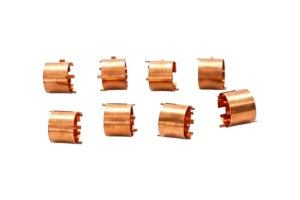
Selecting the right mechanical component partner is never a simple exercise in price comparison. Because custom wave springs operate in severely restricted axial spaces, knowing how to evaluate wave spring suppliers requires a strict assessment of their engineering depth and manufacturing consistency. To secure a highly reliable long-term manufacturing partner, engineering and procurement teams must evaluate suppliers based on their proactive custom design support, advanced metallurgical expertise, precision flat-wire coiling capabilities, and certified quality control systems. Understanding these core evaluation metrics will help you eliminate the risk of assembly downtime, avoid premature fatigue failures, and guarantee seamless scalability from rapid prototyping to high-volume mass production. Explore the technical benchmarks below to confidently qualify your next custom wave spring manufacturer.

Table of Contents
- Why Engineering Support Defines the Best Wave Spring Suppliers
- Evaluating Material Selection and Metallurgical Capabilities
- Core Wave Spring Production Capabilities for Mass Manufacturing
- Strict Quality Control and Testing Requirements for OEMs
- Assessing Prototype to Mass Production Scalability
- Industry-Specific Applications and Supplier Reliability
- Partnering with a Certified Custom Wave Spring Manufacturer
1. Why Engineering Support Defines the Best Wave Spring Suppliers
The most reliable wave spring suppliers provide comprehensive engineering support rather than just manufacturing to print, actively evaluating load requirements, installation space constraints, and fatigue life expectations to recommend the optimal design.
The first critical factor when conducting a wave spring supplier evaluation is determining whether the manufacturer possesses true custom engineering capabilities. Many procurement teams face a significant risk: providing a basic drawing to a supplier who simply machines the part without verifying if the geometry will survive the long-term operational stress. A qualified custom wave spring supplier actively participates in design optimization, structure adjustment, and load improvement before tooling ever begins.
A capable engineering team will analyze your spatial limitations and recommend the exact configuration required to balance load capacity, spring travel, and manufacturing cost:
- Single-Layer Wave Springs: These are optimal for general mechanical applications and compact assemblies with standard load requirements. They provide reliable static sealing and basic bearing preload in minimal axial space.
- Multi-Layer Wave Springs (Crest-to-Crest): Designed for applications requiring increased force capacity and higher load requirements within a limited installation space. By stacking waves in series, this design accommodates significantly larger spring travel distances.
- Nested Wave Springs: Engineered for heavy-duty mechanical systems and high-load applications. Coiled in parallel, these springs multiply the force output linearly, solving extreme load challenges within severely space-limited assemblies.
HEYSHEY distinguishes itself by providing deep engineering support throughout the design stage, helping customers optimize custom wave spring manufacturing based on specific application conditions rather than relying on standard, unverified dimensions.
2. Evaluating Material Selection and Metallurgical Capabilities
A qualified wave spring supplier must possess deep metallurgical expertise to match the spring material to the exact operating environment, utilizing advanced alloys from 17-7 PH Stainless Steel to Inconel to prevent premature fatigue and catastrophic corrosion.
A professional wave spring manufacturer does not force a one-size-fits-all material onto a project. The operating environment dictates the metallurgy. When evaluating a supplier, OEM engineering teams must verify that the manufacturer can recommend materials based on critical variables such as operating temperature, corrosion exposure, continuous fatigue requirements, and required service life.
If a supplier lacks access to specialized alloys or fails to understand the thermal relaxation limits of standard carbon steel, the wave spring will inevitably fail under extreme environmental duress.
Wave Spring Material Selection and Application Data
| Material Grade | Technical Advantages | Typical OEM Applications |
| Music Wire | Good elasticity, extremely high tensile strength, and high cost efficiency. | General industrial applications and enclosed mechanical assemblies. |
| Stainless Steel 302/304 | Excellent balanced corrosion resistance and structural durability. | Standard industrial equipment and consumer mechanical devices. |
| 17-7 PH Stainless Steel | Precipitation-hardened for ultra-high strength and extreme fatigue resistance. | High-performance systems, robotics, and aerospace mechanisms. |
| Inconel (e.g., 718, X-750) | Exceptional high-temperature resistance and resistance to thermal relaxation. | Extreme thermal environments, deep-hole drilling, and engine valves. |
| Hastelloy | Ultimate resistance to localized corrosion, pitting, and harsh chemicals. | Chemical processing applications and marine fluid systems. |
| Titanium | Lightweight, completely non-magnetic, and exceptional strength-to-weight ratio. | Weight-sensitive aerospace applications and medical implants. |
| MP35N | Advanced mechanical properties, ultra-high strength, and biocompatibility. | Critical medical devices and specialty high-stress equipment. |
HEYSHEY provides multiple high-performance material options, empowering engineers to select suitable, highly reliable solutions based entirely on specific performance requirements and budget parameters.
3. Core Wave Spring Production Capabilities for Mass Manufacturing
Production capability dictates whether a supplier can successfully transition a design into stable mass manufacturing, requiring precision flat-wire coiling, strict heat treatment, shot peening, and presetting to maintain dimensional consistency and stable spring force.
An essential part of learning how to choose a reliable wave spring manufacturer is auditing their actual factory floor operations. The manufacturing processes utilized directly influence the micro-structural integrity and fatigue life of the final component.
Key wave spring production capabilities must include:
- Precision Flat-Wire Coiling: Rolling round wire into a flat profile and edge-coiling it on precision CNC machinery ensures the metallurgical grain remains continuous, avoiding the stress risers caused by traditional die-stamping.
- Heat Treatment & Stress Relieving: The severe physical deformation of coiling introduces residual stresses into the metal. A highly capable supplier utilizes strictly controlled thermal baking processes to relieve these stresses and lock in the mechanical properties.
- Shot Peening & Presetting: For high-cycle applications, shot peening induces compressive surface stresses that drastically extend fatigue life. Presetting (compressing the spring to solid height during manufacturing) eliminates initial load relaxation, ensuring the spring maintains its force in the field.
- Precision Grinding: Ensures the load-bearing surfaces are perfectly flat, allowing for even distribution of axial force against mating components.
By utilizing these professional manufacturing processes, HEYSHEY guarantees that its custom wave springs deliver repeatable production quality, consistent dimensions, and reliable delivery schedules for the most demanding high-volume applications.
4. Strict Quality Control and Testing Requirements for OEMs
Effective wave spring quality control relies on rigorous dimensional inspection, digital load testing, and strict material traceability to ensure that every batch meets the exact force and performance specifications required to prevent OEM assembly downtime.
The driving factor behind strategic supplier selection is not securing the lowest possible price, but entirely eliminating supply chain and performance risks. Assembly problems, product returns, and catastrophic production downtime are the direct results of poor quality control.
Evaluation must center on a supplier’s ability to execute a flawless, multi-tiered inspection protocol:
- Dimensional Inspection: The manufacturer must utilize advanced metrology equipment to conduct precise outer diameter (OD) measurement, inner diameter (ID) measurement, free height inspection, and exact wire dimension verification.
- Performance Testing: Physical dimensions alone do not guarantee functionality. The supplier must execute digital load testing, verifying the exact spring force at specified compressed heights and evaluating the overall spring rate performance.
- Material Verification: A reliable OEM wave spring supplier maintains strict raw material control, providing fully documented material certification and complete lot traceability from the wire mill to the finished component.
For highly regulated industries such as automotive, medical, and industrial automation, HEYSHEY’s relentless focus on quality management and inspection processes prevents production failures and completely mitigates quality risks.
5. Assessing Prototype to Mass Production Scalability
Top-tier wave spring suppliers seamlessly manage the complete product lifecycle, advancing from rapid prototype development to high-volume mass production with scalable capacity, batch consistency, and clear communication efficiency.
A major concern during the evaluation process is scalability: “Can this supplier support the project from the initial testing phase all the way through years of mass production?”
A supplier that excels at hand-crafting prototypes but lacks the automated machinery to scale up will bottleneck an entire product launch. The ideal custom wave spring manufacturer operates a streamlined development pipeline: Design Review → Prototype Development → Sample Approval → Trial/Small Batch Production → High-Volume Mass Production.
Important evaluation points during this transition include checking automated production capacity, evaluating delivery reliability under tight deadlines, and auditing batch-to-batch consistency. Sourcing teams typically prefer suppliers that can scale and grow alongside their long-term projects. By providing dedicated engineering communication and scalable capacity, HEYSHEY functions as a long-term strategic manufacturing partner rather than a transactional vendor.
6. Industry-Specific Applications and Supplier Reliability
Different industries demand distinct manufacturing capabilities; automotive requires extreme batch consistency, medical devices demand absolute precision, and industrial equipment relies on heavy-duty durability tailored to sector-specific tolerances.
A supplier must prove they understand the unique regulatory and operational demands of a specific sector, rather than just manufacturing generic springs.
- Automotive and EV Components: Automotive OEM projects prioritize production stability, quality consistency, and absolute supplier reliability. Because components in motor assemblies, bearing systems, and transmissions experience continuous vibration and repeated loading cycles, the supplier’s quality management system must be flawless.
- Industrial Equipment: Manufacturers of heavy industrial machinery require wave springs for bearing preload systems, force compensation components, and compact mechanisms. Supplier evaluation here focuses strictly on stable load performance, heavy-duty durability, and long service life to reduce equipment reliability risks.
- Robotics and Automation Systems: Precision mechanisms and motion systems require accurate force control, compact design, and high cycle performance. Supplier selection for robotics heavily focuses on engineering capability and extreme manufacturing precision.
- Medical Equipment: Medical applications demand high precision, reliable biocompatible materials, and unwavering quality consistency. Wave spring suppliers for this sector must operate under strict manufacturing controls and maintain rigorous material traceability.
7. Partnering with a Certified Custom Wave Spring Manufacturer
Selecting an OEM wave spring manufacturer backed by ISO 9001, IATF 16949, and ISO 13485 certifications guarantees strict adherence to global quality standards, ensuring flawless supply chain integration for advanced industries.
For high-requirement industries, a robust certification system is the fundamental procurement threshold. An uncertified supplier introduces unacceptable liabilities into an assembly line.
When evaluating whether a supplier has successfully manufactured similar high-stress products, the answer lies in their proven custom manufacturing experience and their certified quality management systems. HEYSHEY possesses comprehensive quality management system capabilities, fully certified in ISO 9001 (General Quality Management), IATF 16949 (Automotive Quality Management), and ISO 13485 (Medical Device Quality Management).
Because of these rigorous certifications and a proven track record of engineering excellence, HEYSHEY successfully supports the supply demands of top-tier projects across highly advanced sectors, including:
- AI Computing Infrastructure
- Aerospace Springs
- High-End Electronics
- Medical Devices
- New Energy Vehicles (EV)
- High-End Appliances
- Robotics and Smart Equipment
- Sports Equipment
- Automotive Components
Whether you need precision springs for compact mechanisms, aerospace-grade wave springs, or medical device spring solutions, the same engineering discipline applies: match the alloy to the environment, verify the load digitally, and certify the process. HEYSHEY’s cross-sector experience lets you consolidate multiple spring programs under one qualified partner.
Conclusion
Evaluating wave spring suppliers requires a thorough technical assessment that goes far beyond a simple quote comparison. To ensure the long-term success of an OEM project, it is essential to partner with a manufacturer capable of delivering deep engineering support, advanced metallurgical selection, and precision flat-wire coiling. By prioritizing suppliers with strict quality control testing, the ability to scale seamlessly from prototype to mass production, and critical industry certifications like IATF 16949 and ISO 13485, procurement and engineering teams can effectively eliminate production risks and secure highly reliable mechanical components.
Are you evaluating suppliers for a critical mechanical assembly? Contact HEYSHEY today. Share your application requirements or CAD drawings with our engineering team to receive expert design optimization, customized material recommendations, and a comprehensive plan for scaling your custom wave spring production.
Frequently Asked Questions (FAQ)
How to evaluate wave spring suppliers for a new OEM project?
Evaluate suppliers by auditing their engineering support capabilities, material selection expertise, manufacturing technology (specifically flat-wire CNC coiling), digital load testing infrastructure, and their ability to scale seamlessly from rapid prototyping to high-volume mass production.
What makes a good wave spring supplier for industrial applications?
A strong industrial supplier provides proactive design optimization rather than just manufacturing to print. They offer diverse material options (like Inconel or 17-7 PH) to combat harsh environments and maintain strict batch-to-batch consistency to ensure the wave springs survive heavy continuous cycling.
Why are quality certifications important in wave spring supplier evaluation?
Certifications like ISO 9001, IATF 16949 (Automotive), and ISO 13485 (Medical) prove that the supplier adheres to globally recognized, heavily audited quality management systems. This guarantees total material traceability, rigorous inspection protocols, and a drastically reduced risk of field failures.
How does a custom wave spring manufacturer ensure accurate load performance?
Accurate load performance is ensured through precision flat-wire coiling, mandatory thermal stress relieving to lock in the metallurgical properties, presetting to prevent load relaxation, and 100% automated digital load testing to verify the spring force at the specified working height.
Can a precision wave spring manufacturer help if I don’t have a finalized design?
Yes. A highly capable OEM wave spring manufacturer provides extensive engineering support. By analyzing available installation space, desired load requirements, and the operating environment, their engineers can recommend and develop the optimal single, multi-layer, or nested wave spring design for the application.