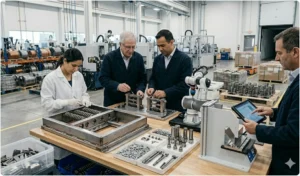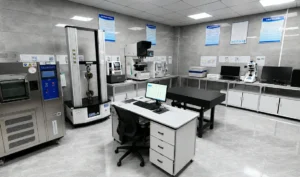
Sourcing generic torsion springs for highly engineered OEM products frequently leads to inaccurate torque delivery, premature metal fatigue, and catastrophic assembly line disruptions. To ensure long-term product reliability, OEM buyers must partner with a custom torsion spring manufacturer that provides early engineering collaboration, precise material selection, and rigorous batch-to-batch quality control from prototype to mass production.
Selecting the right manufacturing partner is no longer just about basic production capacity or unit pricing; it is a critical supply-chain decision that directly impacts overall product performance. As mechanical assemblies become increasingly compact and complex, procurement teams must evaluate a supplier’s true technical depth. Let’s explore the essential engineering and production criteria required to qualify a reliable OEM spring supplier.

Table of Contents
- The Importance of Early Engineering and Design Collaboration
- Material Selection Expertise for Extreme Environments
- Manufacturing Precision and Dimensional Tolerances
- Comprehensive Quality Assurance and Traceability
- Navigating the Prototype to Mass Production Transition
- Key OEM Industry Applications for Custom Torsion Springs
- Evaluating Long-Term Supply Capability and OEM Partnership
1. The Importance of Early Engineering and Design Collaboration
A qualified torsion springs manufacturer participates early in OEM product development by providing spring design optimization, torque analysis, and Design-for-Manufacturing (DFM) suggestions to prevent critical mechanical failures before tooling begins.
The modern manufacturing landscape requires suppliers to do far more than simply process a provided CAD drawing. In applications where space is highly constrained, an unoptimized torsion spring design will inevitably fail. Torsion springs exert rotational forces, and despite their name, the wire itself is subjected to bending stress rather than torsional stress. If an OEM engineer specifies a spring index (the ratio of mean coil diameter to wire diameter) that is too tight, the metal will fracture during the coiling process.
Torque Analysis and Space Utilization
Early engineering collaboration allows the manufacturer to conduct advanced torque analysis. The supplier must verify the wire diameter, the number of active coils, and the resting leg angle to ensure the spring delivers the exact required torque at the specified operating angle. Furthermore, torsion springs inherently reduce in coil diameter and increase in body length when deflected. If the OEM design does not account for this dynamic spatial change, the spring will tightly bind against its mounting mandrel (shaft), causing massive friction spikes and premature failure. A proactive manufacturer will suggest spatial utilization improvements to accommodate this coil reduction seamlessly.
Design-for-Manufacturing (DFM) Suggestions
A true engineering partner provides DFM feedback to eliminate unnecessary production costs. For example, specifying a complex, multi-bend leg configuration might look ideal on a 3D model, but it can exponentially increase setup times and tooling costs. A capable torsion spring manufacturer will recommend simplified, robust leg configurations that achieve the same mechanical anchor points while ensuring highly efficient, repeatable CNC mass production.
2. Material Selection Expertise for Extreme Environments
Expert material selection directly dictates a torsion spring’s fatigue life and environmental resilience, requiring manufacturers to analyze operating temperatures, corrosive exposure, and required torque before recommending specific alloys.
Material selection is the foundational step in mitigating design risk. An OEM buyer should beware of suppliers that only offer standard carbon steel without asking about the application’s working environment. The physical endurance, yield strength, and oxidation resistance of a custom torsion spring depend entirely on the metallurgy of the wire.
For high-cycle applications situated in climate-controlled environments, high-carbon music wire offers an exceptional strength-to-cost ratio. However, if the assembly is exposed to outdoor humidity, automotive fluids, or medical sterilization chemicals, utilizing carbon steel is a guaranteed path to rapid corrosion and mechanical failure. A professional manufacturer guides OEM teams toward the appropriate grade of stainless steel or high-performance alloy, carefully balancing the required mechanical torque against the necessary environmental resilience.
Spring Material Performance Matrix
| Material Grade | Key Characteristics | Corrosion Resistance | Ideal OEM Applications |
| Music Wire (High Carbon) | Extremely high tensile strength, highly cost-effective, high fatigue life. | Low (Requires protective plating) | Consumer electronics, internal robotics, dry industrial automation. |
| Stainless Steel (302/304) | High yield strength, inherent oxidation resistance, stable elasticity. | High | Medical devices, outdoor automation, fluid control valves. |
| Chrome Silicon Alloy | Superior shock absorption, high temperature stability, ultimate fatigue resistance. | Low (Requires protective plating) | Automotive mechanical assemblies, high-cycle power equipment. |
| Specialty Alloys (e.g., Inconel) | Extreme thermal stability and aggressive chemical resistance. | Ultimate | Aerospace mechanisms, severe industrial processing equipment. |
3. Manufacturing Precision and Dimensional Tolerances
Manufacturing precision in custom torsion springs requires advanced CNC coiling to maintain accurate leg angles, tight dimensional tolerances, and stable torque consistency across millions of production cycles.
The functional reliability of a round wire torsion spring relies heavily on the exact geometric configuration of its legs and the uniform pitch of its coils. If the resting leg angle deviates by even a few degrees from the engineering specification, the entire pre-load tension of the OEM assembly is compromised. This deviation causes switches to feel loose, latches to fail to engage, and mechanical covers to sag.
CNC Coiling and Leg Angle Control
To achieve absolute consistency, a premium custom torsion spring manufacturer utilizes state-of-the-art multi-axis CNC wire forming equipment. These machines digitally control the feed rate, coiling tension, and precise bending angles of the spring legs, completely eliminating the inconsistencies inherent in older mechanical setups. This precision ensures that the first prototype and the one-millionth mass-produced unit share the exact same physical dimensions and angular load profiles.
Heat Treatment and Stress Relieving
During the cold-forming process, significant residual stresses are built up inside the metal wire. If a spring is put into service immediately after coiling, it will suffer from rapid “relaxation”—a permanent loss of return torque. Top-tier manufacturers implement strictly calibrated thermal heat treatments (stress relieving) immediately after forming. This baking process realigns the metallurgical grain structure, locking in the precise leg angles and guaranteeing long-term stable torque consistency throughout the product lifecycle.
4. Comprehensive Quality Assurance and Traceability
A reliable OEM supplier guarantees product consistency through comprehensive quality assurance, implementing incoming material inspection, in-process dimensional checks, and dynamic torque testing to eliminate the risk of field failures.
For OEM procurement teams, quality control cannot be an afterthought; it must be integrated into every phase of the manufacturing process. A sudden variation in spring force can trigger massive product recalls, especially in highly regulated sectors like automotive and healthcare.
A well-established quality system begins with raw material verification. The manufacturer must analyze incoming wire for tensile strength and surface defects, ensuring the metallurgy matches the specified engineering requirements. During production, in-process dimensional inspection is mandatory. Advanced manufacturers utilize optical laser micrometers to continuously monitor the coil diameter and leg lengths on the machine, instantly ejecting any part that falls outside the acceptable control limits.
Finally, final product verification involves physical torque and functional testing. By placing the custom torsion springs on digital torque testers and deflecting them to their maximum operating angle, the quality assurance team verifies that the rotational force aligns perfectly with the OEM’s dynamic load specifications. Total production traceability ensures that any batch can be traced back to its original raw material heat lot, fulfilling strict ISO compliance requirements.
5. Navigating the Prototype to Mass Production Transition
An experienced torsion spring supplier shortens OEM development cycles by seamlessly supporting rapid prototype development, pilot production validation, and scalable high-volume manufacturing without losing dimensional consistency.
Many OEM programs fail at the critical juncture between R&D prototyping and volume manufacturing. A supplier might be able to hand-craft ten perfect samples in a tool room, but if their automated production lines cannot replicate those exact parameters at high speeds, the project will stall.
An experienced manufacturer minimizes technical risk by ensuring that the CNC programs and tooling used to create the validated prototype are identical to those used in mass production. This seamless transition begins with rapid prototype development, allowing OEM engineers to physically install the springs into their assemblies to verify the tactile feel, torque curve, and spatial fit. If modifications are required, the supplier executes rapid engineering modifications and produces a pilot production run. This phased approach allows the OEM to conduct long-term lifecycle and fatigue testing before committing to high-volume manufacturing, dramatically reducing the risk of costly tooling errors.
6. Key OEM Industry Applications for Custom Torsion Springs
Custom torsion springs drive critical rotational mechanisms across demanding sectors, ensuring motion accuracy in robotics, precise force control in medical devices, and long-term fatigue life in automotive assemblies.
The mechanical demands placed on a torsion spring vary wildly depending on the industry. A supplier’s broad application experience proves their ability to adapt to distinct regulatory and performance standards.
Automotive and Medical Devices
In the automotive sector, custom torsion springs are embedded deep within door systems, latches, heavy-duty seat mechanisms, and pedal returns. These components are subjected to extreme temperature fluctuations and demand a massive fatigue life. OEM priorities here include highly stable quality and reliable long-term supply to prevent assembly line shutdowns.
Conversely, medical devices require ultra-precision miniature spring components. Torsion springs used in surgical instruments, diagnostic hardware, and drug delivery systems must deliver repeatable mechanical performance within highly compact assemblies. Medical OEMs demand application-specific design support, extremely tight tolerances, and biocompatible stainless steel materials.
Robotics, Automation, and Consumer Electronics
Industrial automation and robotics systems operate continuously, executing the same rotational movements millions of times. Custom torsion springs in these systems are optimized for absolute motion accuracy, equipment durability, and space-efficient designs to prevent mechanism jamming. In consumer electronics, miniaturization is the driving factor. Electronic housings require tiny torsion springs with precise force control to operate hinges, battery doors, and tactile switches flawlessly over the lifespan of the device.
7. Evaluating Long-Term Supply Capability and OEM Partnership
Selecting a torsion springs manufacturer requires evaluating their long-term supply capability, ensuring they offer continuous technical support, stable material sourcing, and dedicated production capacity to scale alongside your project.
OEM procurement is inherently forward-looking. A supplier is only as good as their ability to deliver consistent quality on the tenth order as flawlessly as they did on the first. OEM buyers must evaluate a partner’s financial stability, machine redundancy, and supply chain logistics. If a manufacturer relies on a single CNC machine for your specific wire diameter, a single mechanical breakdown will sever your supply line.
By partnering with a facility that offers robust OEM manufacturing experience, you secure a dedicated supply chain asset capable of adapting to sudden volume spikes and continuous engineering improvements.
The Hershey Engineering Advantage
At Guangdong Hershey Spring Industrial Co., Ltd., we provide custom torsion spring solutions designed specifically to meet the rigorous demands of global OEM manufacturers. We understand that success requires more than just bending wire; it requires deep technical collaboration.
We support our clients through every stage of the product lifecycle, offering:
- Custom Torsion Spring Design: Tailored geometric solutions to fit your exact spatial constraints.
- Engineering Consultation: Proactive DFM feedback and comprehensive torque analysis.
- Material Selection Support: Expert metallurgical recommendations to ensure environmental resilience.
- Precision Manufacturing: Advanced CNC technology guaranteeing exact leg angles and dimensional tolerances.
- Prototype Development: Rapid sample verification to accelerate your R&D cycles.
- OEM & Mass Production Capability: Highly scalable, traceably controlled high-volume manufacturing.
Partner with Hershey to shorten your development cycles, reduce design risks, and secure absolute mechanical reliability for your next high-performance OEM assembly.
Conclusion
Choosing a custom torsion spring manufacturer is a highly strategic decision that dictates the mechanical success, safety, and longevity of your OEM product. Procurement teams and design engineers must look beyond basic pricing and evaluate a supplier’s ability to provide early engineering collaboration, expert material selection, and rigorous CNC manufacturing precision. By prioritizing a partner that offers comprehensive quality assurance and a seamless pathway from rapid prototyping to stable mass production, OEMs can eliminate the risks of premature fatigue and mechanism failure. For precision applications across automotive, medical, and robotic industries, securing a technically proficient manufacturing partner is the ultimate key to market success.
Are you ready to optimize your rotational mechanisms for mass production? Contact the engineering team at Guangdong Hershey Spring Industrial Co., Ltd. today. Send us your CAD drawings or technical specifications, and we will provide detailed torque analysis, expert material recommendations, and a highly competitive OEM quotation tailored to your exact project requirements.
Frequently Asked Questions (FAQ)
What is the difference between a custom torsion spring and a standard torsion spring?
A standard torsion spring is pre-manufactured to generic dimensions and torque values, which often fail to fit the tight spatial constraints of modern OEM assemblies. Custom torsion springs are specifically engineered for your exact installation space, required leg angles, specific torque output, and operating environment.
How does leg angle affect a torsion spring’s performance?
The resting leg angle dictates the exact starting position of the spring’s rotational force. If the leg angle is manufactured incorrectly, the pre-load tension in your mechanism will be wrong, leading to components that feel too loose, fail to return properly, or bind against other parts.
Why is material selection critical for OEM custom torsion springs?
Material selection dictates the spring’s yield strength, fatigue life, and corrosion resistance. Using standard carbon steel in a humid environment will cause rapid rusting and failure, whereas selecting the correct grade of stainless steel or specialty alloy ensures long-term reliability under severe conditions.
How do manufacturers ensure torque consistency in mass production?
Top-tier manufacturers ensure consistency by utilizing advanced multi-axis CNC wire forming machines that digitally control pitch and bend angles. Additionally, they perform mandatory stress-relieving heat treatments and utilize digital torque testers to verify that every batch meets the dynamic load specifications.
What happens if the internal diameter of a round wire torsion spring is too small?
When a torsion spring is twisted in the direction of its wind, the coil body inherently decreases in diameter and grows in length. If the internal diameter is designed too small, it will bind tightly against the mounting shaft during operation, causing massive friction, erratic torque delivery, and eventual snapping.
How can early engineering collaboration reduce OEM production costs?
Early collaboration allows the spring manufacturer to provide Design-for-Manufacturing (DFM) suggestions before tooling begins. They can simplify overly complex leg configurations, optimize the spring index to reduce scrap rates, and prevent costly, late-stage design revisions that delay product launches.