Sourcing unverified non-standard springs introduces severe operational risks; partnering with an unqualified supplier often leads to inconsistent tension, premature hook failure, and stalled assembly lines. To choose a reliable custom extension spring manufacturer, OEM buyers must evaluate their in-house engineering support, advanced CNC coiling capabilities, material selection expertise, and strict batch-to-batch quality control.
Moving from a conceptual CAD drawing to full-scale mass production requires more than just raw machine capacity. It demands a manufacturing partner who acts as an extension of your engineering team, capable of mitigating design risks and guaranteeing stable supply for critical industrial applications. Let’s explore the technical criteria required to qualify your next precision spring supplier.
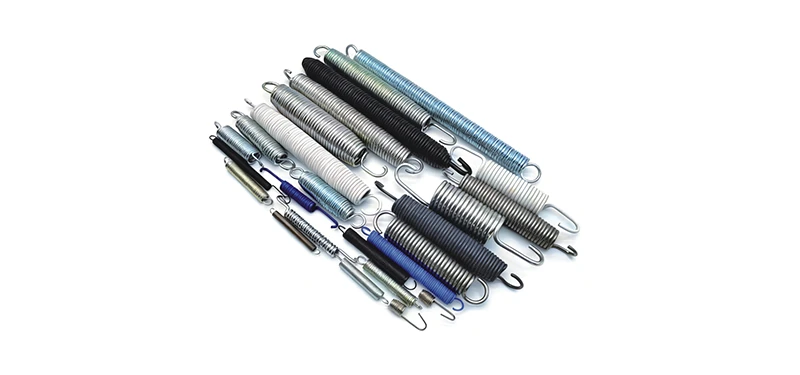
Table of Contents
- Why Evaluating Extension Spring Manufacturers is Critical for OEMs
- Assessing Custom Extension Spring Design Capability
- Evaluating Material Selection and Metallurgy Expertise
- Manufacturing Tolerances and Quality Control Systems
- The Transition from Prototype to Mass Production
- Key Industry Applications for Custom Tension Springs
- True Manufacturer vs. Trading Company: Identifying the Difference
1. Why Evaluating Extension Spring Manufacturers is Critical for OEMs
Selecting a supplier for critical mechanical components requires a deep understanding of the unique forces those components will endure. Extension springs are fundamentally different from other spring types because they require pre-loaded internal force.
Evaluating extension spring manufacturers is critical because variations in initial tension, hook geometry, and fatigue life directly impact the mechanical reliability and safety of the final OEM assembly.
Unlike compression springs, extension springs are tightly wound with an internal force known as “initial tension.” This tension holds the coils together and must be overcome before the spring begins to extend. If a supplier lacks the sophisticated machinery to control this initial tension accurately, the resulting springs will exhibit inconsistent load outputs. For an OEM buyer, this means mechanisms will actuate unevenly—doors may fail to latch properly, switches may feel loose, and industrial levers may not return to their neutral positions.
Furthermore, extension springs most commonly fail at the hook ends due to complex bending and torsional stresses. An unqualified supplier might blindly follow a flawed drawing, resulting in stress concentrations that cause premature snapping under dynamic loads. A reliable supplier proactively identifies these risks and suggests design modifications to ensure longevity.
2. Assessing Custom Extension Spring Design Capability
A supplier’s ability to manufacture a spring is secondary to their ability to engineer it correctly for your specific application.
A highly qualified custom extension spring manufacturer will actively optimize wire diameter, outer diameter, free length, and initial tension, while selecting the correct hook configuration to match specific installation constraints.
When reviewing a potential partner, their engineering team should be able to provide deep technical insights into your custom extension spring design rather than simply quoting a price.
Dimensional Optimization and Load Matching
When designing custom tension springs, engineers must balance the physical space available (installation dimensions) with the required mechanical output (load and cycle life). The relationship between the mean coil diameter ($D$) and the wire diameter ($d$)—known as the spring index—dictates the manufacturing difficulty and the stress on the spring. If an OEM specifies a highly restrictive installation space requiring a heavy load, a competent supplier will run precise load calculations. They will determine the optimal spring rate and adjust the initial tension during the coiling process to ensure the working load is met without exceeding the material’s elastic limit.
Hook Design and Stress Management
The most vulnerable part of any extension spring is the hook or loop. This area is subjected to high levels of bending stress and torsional stress during extension. Different end configurations—such as open hooks, closed machine loops, extended hooks, or custom geometries—drastically affect performance and installation.
A professional extension spring design review will evaluate the transition radius where the coil body meets the hook. If the bend is too sharp, it creates a stress riser. A reliable manufacturer will often recommend increasing the bend radius or utilizing specialized swivel hooks for high-cycle applications to eliminate torsional stress entirely, thereby preventing fatigue failure.
3. Evaluating Material Selection and Metallurgy Expertise
The operating environment of your mechanical assembly dictates the required metallurgy of the spring.
Material selection capability is evaluated by the supplier’s ability to recommend specific alloys—such as high-carbon steel, chrome silicon, or precipitation-hardening stainless steel—based on the component’s required fatigue life and operating environment.
OEM custom extension springs are deployed in environments ranging from clean medical rooms to corrosive automotive undercarriages. A trusted supplier will help you navigate the complex matrix of tensile strength, temperature resistance, and cost.
High-Stress vs. Corrosive Environments
For general mechanical applications not exposed to moisture, high-carbon steels (like Music Wire) offer exceptional tensile strength and are highly cost-effective. However, in applications facing high-frequency repeated movement—such as industrial automation—alloy steels like Chrome Silicon provide superior resistance to shock and relaxation. For environments where corrosion is a primary concern, such as chemical processing or marine equipment, standard coatings (like zinc plating) may not suffice. In these cases, the manufacturer must possess the expertise to process stainless steels (e.g., 304, 316, or 17-7 PH), which require distinct coiling speeds and heat-treatment protocols compared to carbon steels.
Material Evaluation Matrix for Extension Springs
| Material Type | Common Standard | Tensile Strength | Corrosion Resistance | Ideal B2B Application |
| Music Wire (Carbon) | ASTM A228 | Very High | Low (Requires plating) | Indoor industrial machinery, general mechanical assemblies. |
| Chrome Silicon | SAE 9254 | High | Low (Requires plating) | High-shock applications, automotive transmission springs. |
| Stainless Steel 302 | ASTM A313 | Medium-High | High | Food processing equipment, standard medical devices. |
| 17-7 PH Stainless | ASTM A313 | Very High | Very High | High-temperature applications, aerospace, advanced EV parts. |
| Phosphor Bronze | ASTM B159 | Low-Medium | High | Electronic contacts, non-magnetic precision requirements. |
4. Manufacturing Tolerances and Quality Control Systems
The true test of tension spring manufacturers is not making one perfect spring, but making one million perfect springs with identical performance characteristics.
Reliable custom tension springs require advanced CNC-controlled coiling processes, in-line optical inspection, and strict dynamic load testing to ensure batch-to-batch consistency and prevent dimensional variations during mass production.
When auditing a custom spring manufacturing facility, buyers must look beyond the sales office and investigate the actual production floor machinery and QA laboratories.
Advanced CNC Production
Modern custom extension springs require complex, multi-axis CNC wire-forming machines to ensure that every hook angle, coil diameter, and extended length is tightly controlled. Traditional mechanical coilers rely heavily on operator skill and are prone to drift over long production runs. CNC technology allows for precise digital control over the pitch and initial tension, ensuring that the force output of the first spring matches the force output of the final spring in a high-volume batch.
Inspection and Validation Protocols
A reliable extension spring supplier implements quality gates at every production stage. This includes incoming raw material inspection (verifying wire tensile strength), in-process optical sorting (using lasers or cameras to eject out-of-tolerance springs instantly), and final dynamic load testing. For critical applications, the supplier should provide detailed First Article Inspection (FAI) reports and Material Test Reports (MTRs), ensuring complete traceability for OEM buyers.
5. The Transition from Prototype to Mass Production
A major pain point for OEM buyers is the disconnect between R&D prototyping and actual high-volume manufacturing.
A competent OEM custom extension spring manufacturer provides comprehensive engineering reviews, rapid prototype validation, and scalable production adjustments to eliminate design risks before moving into high-volume manufacturing.
Your supplier must have a structured framework to safely scale up production without compromising the specifications approved during the sample phase.
Engineering Review and Prototyping
Before any tooling is cut or wire is coiled, a reliable supplier conducts a Design for Manufacturability (DFM) review. If your design specifies an extension spring with an extreme hook angle that is impossible to mass-produce efficiently, the engineering team should immediately flag this and propose a cost-effective alternative. Following the review, the manufacturer should produce a small batch of prototypes for physical validation. This allows the OEM’s testing department to install the springs into the actual mechanism to verify the tactile feel, pulling force, and installation clearance.
Mass Production Scalability and Stability
Once the prototype is validated, the transition to mass production must be seamless. This requires a supplier with sufficient machine redundancy and robust supply chain management for raw materials. Buyers should assess whether the factory can handle unexpected spikes in order volume, maintain stable lead times, and consistently apply uniform surface treatments (like e-coating or passivation) across large batches without causing hydrogen embrittlement.
6. Key Industry Applications for Custom Tension Springs
Different industries apply vastly different stress profiles to their mechanical components. A versatile manufacturer understands these sector-specific nuances.
Custom extension springs are vital across diverse sectors, providing controlled pulling force in automotive latch systems, industrial equipment mechanisms, compact electronic devices, and precision medical instruments.
Understanding the context of the application allows the manufacturer to apply the correct tolerances and testing standards.
Automotive and Industrial Equipment
In the automotive sector, extension springs are heavily utilized in mechanical adjustment systems, seating tracks, and latching mechanisms. These components endure continuous vibration, extreme temperatures, and demand a long service life without force degradation. Similarly, in heavy industrial machinery, custom extension springs govern the precise movement of levers, robotic arms, and tensioning pulleys. These environments require high fatigue resistance, often dictating the use of heavy-duty alloy steels and robust closed-loop hook designs.
Electronics and Medical Devices
Conversely, the electronics and advanced medical equipment industries require extreme miniaturization and pristine cleanliness. Extension springs used in surgical tools or compact electronic switches demand microscopic tolerances, stable force output, and total resistance to sterilization chemicals or environmental moisture. These applications rely exclusively on custom spring manufacturing, as off-the-shelf components simply cannot meet the precise dimensional constraints or stringent FDA/ISO quality requirements.
7. True Manufacturer vs. Trading Company: Identifying the Difference
Many B2B buyers unknowingly source components through trading companies, leading to communication delays, inflated costs, and zero control over manufacturing quality.
Partnering directly with a custom extension spring manufacturer rather than a trading company ensures direct engineering communication, superior quality control, transparent production capacity, and long-term supply reliability.
When project timelines are tight and mechanical failures are costly, you need direct access to the engineers configuring the CNC machines.
The Hershey Spring Advantage
Identifying a true manufacturing partner means looking at their infrastructure, engineering depth, and core competencies. Guangdong Hershey Spring Industrial Co., Ltd. operates as a direct, comprehensive manufacturing partner for global OEMs.
Having recently relocated to a new, state-of-the-art facility equipped with 50 high-precision CNC machines, we have vastly expanded our production capacity and process control. We do not just make springs; we engineer comprehensive hardware solutions. Our strict quality management systems span our specialized product categories, ensuring every component meets exacting industrial standards:
- Precision Springs
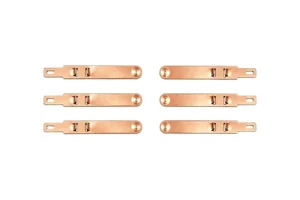
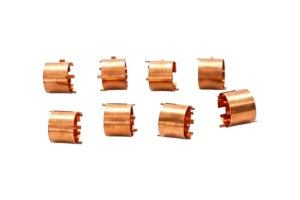
- Metal Clips & Contacts
- Precision Stamping Components
- Precision Welding Assemblies
- Elastic Structural Components
By working directly with our factory, you bypass middleman markups, gain immediate access to technical design support, and secure a long-term supply chain partner capable of scaling alongside your project’s growth.
Conclusion
Choosing the right custom extension spring manufacturer is a critical procurement decision that directly affects the performance, safety, and longevity of your final product. By rigorously evaluating a supplier’s design optimization capabilities, material selection expertise, CNC production technology, and quality control systems, OEM buyers can confidently mitigate mechanical risks. Remember that the cheapest upfront quote often leads to the highest long-term costs if the springs fail in the field. Prioritize suppliers who offer transparent engineering support and a proven pathway from prototype validation to stable mass production.
Are you uncertain if your current spring design is optimized for mass production?
Send your spring drawings, technical specifications, or functional requirements to the engineering team at Guangdong Hershey Spring Industrial Co., Ltd. We will provide a comprehensive design evaluation, material recommendations, and a highly competitive quotation to ensure your next project succeeds. Contact us today to request custom samples and technical consultation.
Frequently Asked Questions (FAQ)
What is the difference between an extension spring and a tension spring?
There is no functional difference; the terms are used interchangeably in the industry. Both refer to tightly wound helical springs designed to operate with a pulling force, absorbing and storing energy as they are stretched apart.
Why do I need custom extension springs instead of standard catalog sizes?
Standard springs rarely fit the specific installation space or provide the exact initial tension required by specialized OEM mechanisms. Custom manufacturing ensures precise dimensional fits, optimized hook designs, and the exact spring rate necessary for reliable, long-term performance.
How does initial tension affect my custom spring design?
Initial tension is the internal force that holds the coils together. It dictates the minimum amount of force required before the spring begins to stretch. Custom manufacturers can increase or decrease this tension during coiling to match your mechanism’s exact tactile feedback or return-speed requirements.
Can an extension spring manufacturer help design a custom hook?
Yes. A professional extension spring manufacturer will utilize advanced CNC wire forming equipment to create specialized hook geometries—such as extended hooks, side loops, or insert swivel hooks—that perfectly integrate with your unique mounting points while minimizing stress concentrations.
What materials are best for high-cycle extension springs?
For high-cycle applications subject to rapid repeated movement, alloy spring steels like Chrome Silicon (SAE 9254) are superior due to their high fatigue resistance. If the environment is corrosive, precipitation-hardening stainless steels like 17-7 PH are highly recommended.
How do manufacturers ensure quality consistency in mass production?
Top-tier manufacturers ensure consistency by utilizing automated multi-axis CNC coilers equipped with in-line optical inspection cameras and lasers. These systems measure the springs in real-time, instantly rejecting any parts that fall outside the specified dimensional or tension tolerances.
What information should I provide to get an accurate quote for custom tension springs?
To receive a precise evaluation, provide a technical drawing indicating the wire diameter, outer diameter, free length (inside hooks), required material, specific hook type, desired working load at a specific extended length, and your estimated annual production volume.