Using standard off-the-shelf springs in demanding automotive mechanisms often leads to premature fatigue failure, inconsistent actuation forces, and costly assembly line halts. To ensure absolute reliability under continuous vibration, buyers must source custom extension springs engineered with precise initial tension, fatigue-resistant materials, and specialized hook configurations.
Partnering with an experienced manufacturer bridges the gap between theoretical design and scalable mass production, minimizing engineering risks for Tier 1 suppliers and automotive design teams.
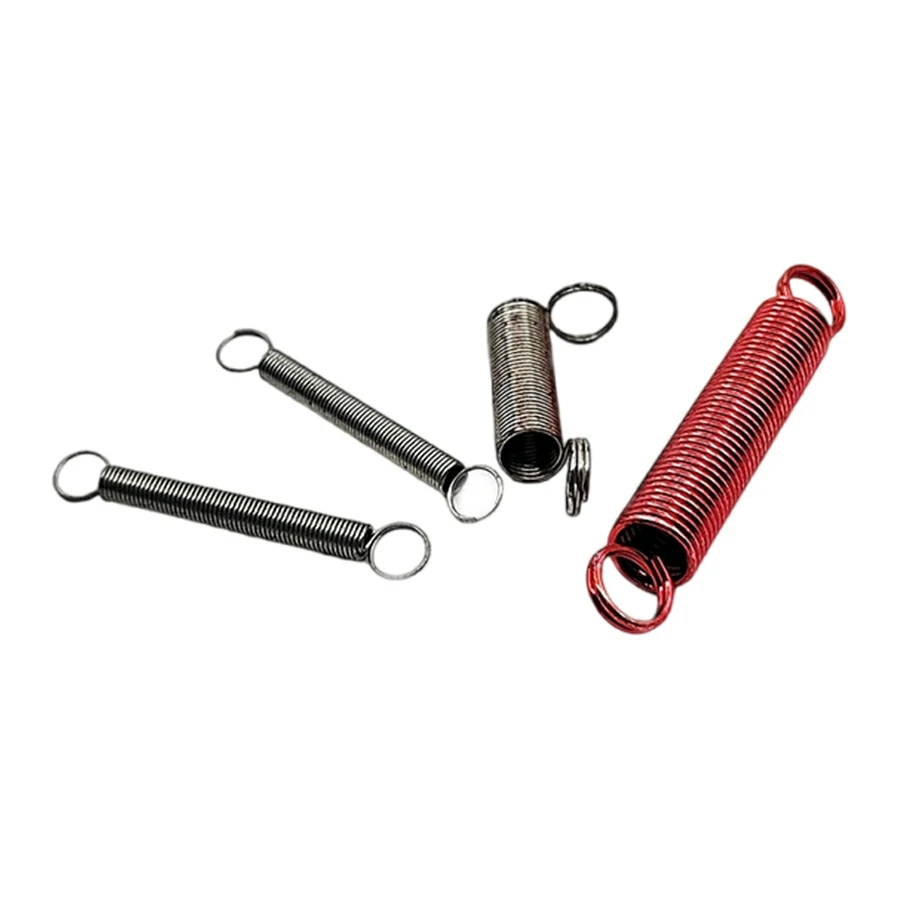
Table of Contents
- Why Automotive Assemblies Demand Custom Extension Springs
- Core Extension Spring Design Parameters for OEM Requirements
- Material Selection Strategies for Automotive Tension Springs
- Key Automotive Applications Utilizing Precision Extension Springs
- Manufacturing Control: Managing Prototype to Mass Production
- How to Evaluate OEM Custom Extension Spring Manufacturers
1. Why Automotive Assemblies Demand Custom Extension Springs
Automotive mechanisms operate in aggressive environments characterized by high-frequency vibrations, extreme temperature fluctuations, and the expectation of hundreds of thousands of cycles without failure.
Automotive custom extension springs are precision-engineered coiled components specifically wound to provide exact initial tension, targeted spring rates, and specialized hook geometries designed for tight OEM assembly packaging.
Relying on standard catalog springs for automotive applications introduces severe risks. Standard springs are designed for generic mechanical applications and often fail to meet the rigorous automotive standards (such as IATF 16949 requirements) for force stability and fatigue life.
The Cost of Generic Spring Failure
When an extension spring fails in an automotive application, it is rarely due to a failure in the main body coils. Failure almost exclusively occurs due to dynamic fatigue or stress concentration at the hook ends caused by continuous vibration and repeated movement. Custom extension spring manufacturers analyze the exact operational envelope of the mechanism to design a spring that mitigates torsional and bending stresses. This proactive engineering prevents catastrophic failures that could lead to safety recalls, compromised lock systems, or sticking pedal assemblies.
The Role of Initial Tension in Precision Mechanisms
Unlike compression springs, extension springs are wound with a specific internal force called initial tension—the force that keeps the coils tightly pressed together. For a mechanism to begin extending the spring, the applied load must first overcome this initial tension. Custom tension springs allow engineers to dictate exactly how much initial tension is built into the coil. This is a critical factor for tactile feedback in automotive switches and the immediate retraction speed in safety latch mechanisms, ensuring that the component acts predictably every single time the user engages it.
2. Core Extension Spring Design Parameters for OEM Requirements
Designing a tension spring for an automotive component is not merely about matching the physical space; it requires a complex calculation of load dynamics and stress factors.
The most critical extension spring design parameters include the wire diameter, spring outer diameter (OD), free length, initial tension, working load at maximum extension, cycle life requirements, and the specific hook or loop configuration.
Experienced extension spring manufacturers utilize advanced engineering software to optimize these variables, ensuring the spring provides a stable force output without exceeding the material’s elastic limit.
Dimensional Constraints and Force Requirements
The physical footprint of modern automotive components is shrinking, particularly in the doors, seating mechanisms, and EV interiors. This requires tension springs to deliver higher forces in tighter spaces. By carefully manipulating the index ratio (the ratio of the mean coil diameter to the wire diameter), a custom extension spring manufacturer can achieve the precise working load required without causing coil binding or premature yielding.
Understanding Hook Configurations and Stress
The most critical aspect of extension spring design is the hook or loop. This area endures the highest stress concentration—combining both bending stress and torsional stress during operation. Custom automotive springs frequently require specialized hook designs to fit unique mounting pins or to navigate around other moving components.
| Hook / Loop Configuration | Design Characteristics | Typical Automotive Application | Stress Concentration Level |
| Machine Loop (Cross Center) | Standard loop crossing the center line of the spring body. | Seat track adjustment mechanisms, generic pull applications. | Moderate (Most common, reliable for general use) |
| Side Loop | Loop formed on the outer edge of the spring diameter. | Mechanisms where the mounting pin is flush against a sidewall. | High (Introduces eccentric loading) |
| Extended Hook | Elongated straight section before the hook curve. | Deep-set latch systems, remote release levers. | Very High (Requires thicker wire to prevent bending) |
| Swivel Hook (Insert) | A separate hook piece inserted into a coned end of the spring body. | High-cycle brake pedals, heavy-duty return mechanisms. | Low (Allows free rotation, eliminating torsional stress) |
Working with an expert OEM spring supplier allows buyers to evaluate whether an open hook, closed loop, or a custom complex structure is best suited for both the mechanical function and the automated assembly line process.
3. Material Selection Strategies for Automotive Tension Springs
The operating environment of an automotive component dictates its material requirements, balancing factors like tensile strength, fatigue life, temperature resistance, and cost-effectiveness.
Material selection for automotive extension springs directly determines the component’s fatigue resistance and operational lifespan, with high-carbon steel serving general mechanics, alloy steel for high-stress dynamic loads, and stainless steel for corrosive environments.
An experienced supplier will not simply process your drawing; they will provide a material recommendation based on the spring’s location within the vehicle and its intended duty cycle.
High-Carbon Steel vs. Alloy Spring Steel
For interior mechanisms protected from the elements, high-carbon spring steels (such as Music Wire ASTM A228 or Hard Drawn MB) offer exceptional tensile strength and are highly cost-effective for mass production. However, for applications subjected to extreme dynamic loading, high temperatures, or rapid cycling—such as transmission valves or heavy pedal returns—alloy spring steels like Chrome Silicon (SAE 9254) or Chrome Vanadium are required. These alloys provide superior shock resistance and are less prone to relaxation under continuous tension.
Stainless Steel for EV and Exposed Environments
With the rapid expansion of electric vehicles (EVs), there is a heightened demand for lightweight, durable, and highly corrosion-resistant automotive spring components. Stainless steel alloys (such as Type 302, 304, or 316) are critical for mechanisms exposed to road salt, moisture, or battery cooling systems. For EV components that require both high tensile strength and corrosion resistance, specialized precipitation-hardening stainless steels like 17-7 PH are frequently specified by tension spring manufacturers to guarantee a long service life without degradation.
4. Key Automotive Applications Utilizing Precision Extension Springs
Tension springs are the invisible engines driving the tactile feel, safety, and functionality of modern vehicle interiors and mechanical systems.
Precision extension springs are integrated into vital automotive systems requiring controlled return movements and stable pulling forces, including door latch systems, seat adjustment tracks, pedal controls, and electric vehicle hardware.
Each of these applications carries unique engineering challenges that mandate flexible customization capabilities from the supplier.
Automotive Door Lock and Latch Systems
Safety and security are paramount in door mechanisms. Extension springs in latches provide the controlled pulling force that ensures a door snaps shut securely and releases smoothly upon user command. These springs require a highly compact structure to fit within thin door panels, while demanding reliable repeated operation over hundreds of thousands of cycles. A drop in initial tension here results in a “mushy” door handle feel or, worse, a door that fails to latch.
Seat Adjustment Mechanisms
Automotive seats utilize an array of tension springs to assist in manual movement, hold mechanical tracks in place, and provide return force for reclining mechanisms. The major consideration here is long cycle life combined with strict space limitations. Furthermore, because these springs are located near the passenger cabin floor, they must offer consistent force output without generating noise or squeaking under vibration.
Pedal and Mechanical Control Systems
Whether it is a clutch return, brake pedal assist, or a parking brake mechanism, spring components in pedal assemblies require flawless force consistency. The driver relies on accurate force feedback to modulate the vehicle. Fatigue resistance and mechanical durability are the primary focus areas; a failure in a pedal return spring directly compromises the drivability and safety of the vehicle.
EV Components and Emerging Technologies
Electric vehicles have introduced a new wave of applications for custom extension springs. They are extensively used in charging port mechanisms (door pop-out and return), advanced interior modular seating, and electronic component housing assemblies. EV manufacturers expect OEM custom extension springs to be lightweight, perfectly treated against corrosion, and manufactured with zero defects to match the sophisticated nature of modern electric platforms.
5. Manufacturing Control: Managing Prototype to Mass Production
A successful automotive component program requires a supplier who can transition seamlessly from low-volume R&D prototyping to high-volume, automated mass production without losing quality.
To ensure automotive supply chain reliability, a custom extension spring manufacturer must implement rigorous process controls, guaranteeing dimensional consistency, stable batch-to-batch spring force, and validated fatigue resistance.
Automotive buyers should look for suppliers who integrate automated optical inspection and real-time load testing directly into their CNC coiling lines.
Ensuring Batch-to-Batch Dimensional Consistency
Automotive assembly lines are highly automated, meaning any deviation in a spring’s hook angle, free length, or wire diameter can jam robotic pick-and-place machines. A professional precision extension spring supplier utilizes multi-axis CNC wire forming equipment to guarantee that the one-millionth spring is identical to the first approved prototype. Furthermore, specialized surface treatments—such as zinc plating, e-coating, or shot peening—must be carefully controlled to prevent hydrogen embrittlement, a common cause of sudden spring failure.
Fatigue Resistance Testing and Validation
Before a custom automotive spring reaches mass production, it must undergo rigorous validation. Suppliers must be capable of conducting physical lifecycle testing to simulate the exact pulling force and cycle rate the spring will experience in the vehicle. By verifying fatigue resistance and tracking any loss of initial tension over time, the manufacturer provides the data necessary for OEM engineers to confidently approve the component for the assembly line.
6. How to Evaluate OEM Custom Extension Spring Manufacturers
Sourcing the right partner for automotive springs goes far beyond finding the lowest price per piece. It is about establishing a long-term partnership with a supplier capable of reducing your design risks.
When selecting an extension spring manufacturer, OEM buyers must evaluate their ability to provide custom engineering support, manufacture complex hook structures, and demonstrate a proven track record of stable mass production capacity.
The most frequent question B2B buyers ask is: Can the supplier manufacture springs exactly according to my drawings and specifications? The answer relies entirely on their equipment and engineering depth.
Engineering Support and Process Scalability
Automotive clients rarely purchase standard parts. They require a partner who will review CAD drawings, offer design optimization to reduce stress concentrations, recommend alternative materials for cost savings, and provide fast prototype validation. A capable OEM spring supplier acts as an extension of your own engineering department, managing process adjustments proactively before full-scale production begins.
The Guangdong Hershey Spring Advantage
As a highly experienced manufacturer in the precision hardware sector, Guangdong Hershey Spring Industrial Co., Ltd. specializes in solving complex mechanical challenges for global B2B buyers. Having recently upgraded our manufacturing capabilities, we now operate from a new, advanced facility equipped with 50 high-precision CNC machines.
We maintain strict quality control across our specialized core product categories:
- Precision Springs
- Metal Clips & Contacts
- Precision Stamping Components
- Precision Welding Assemblies
- Elastic Structural Components
Whether you need open hook extension springs, closed loop designs, or highly specialized configurations for tight automotive assemblies, we possess the OEM mass production ability to ensure reliable delivery, process control, and stable batch quality.
Conclusion
Specifying custom extension springs for automotive components is a highly technical process that demands careful attention to initial tension, hook design, material fatigue properties, and manufacturing consistency. By focusing on these core design and manufacturing parameters, automotive engineers and procurement teams can eliminate assembly issues, extend the lifecycle of their mechanisms, and guarantee superior performance under harsh operating conditions.
Transitioning from a prototype to a reliable mass-production component requires a partner with deep industry expertise, advanced machinery, and unwavering quality control.
Are you facing a complex design challenge with your automotive mechanisms?
Contact Guangdong Hershey Spring Industrial Co., Ltd. today for professional technical consultation, precise design optimization, product samples, or a comprehensive mass production quotation tailored to your exact specifications.
Frequently Asked Questions (FAQ)
What is the difference between custom extension springs and standard catalog springs?
Custom extension springs are engineered specifically to your application’s exact space constraints, load requirements, and cycle life expectations. Unlike standard springs, custom manufacturing allows for precise control over initial tension, specific hook configurations, and optimized material selection for automotive environments.
How does initial tension affect an automotive tension spring?
Initial tension is the internal force wound into an extension spring that holds the coils tightly together. It determines the minimum amount of force required to start extending the spring, which is critical for providing accurate tactile feedback and immediate return speeds in automotive switches and latches.
Why do extension springs usually fail at the hook?
The hook or loop is the weakest point of an extension spring because it is subjected to a combination of high bending and torsional stresses during operation. Custom extension spring manufacturers optimize the transition radius from the coil body to the hook to minimize this stress concentration.
What materials are best for EV custom extension springs?
For electric vehicle components, stainless steel alloys (such as 302, 316, and 17-7 PH) are highly recommended. They provide the necessary tensile strength while offering superior resistance to corrosion caused by road environments and battery cooling systems, without requiring heavy protective coatings.
Can you manufacture complex hook structures for tight automotive spaces?
Yes. With advanced multi-axis CNC coiling equipment, we can manufacture highly complex structures including extended hooks, side loops, insert swivel hooks, and custom geometric loops designed to fit uniquely shaped mounting pins and restricted installation spaces.
What information is needed to quote a custom extension spring?
To provide an accurate technical evaluation and quotation, we require the wire diameter, outer diameter, free length (inside hooks), hook type, material preference, required working load at a specific extension, and the estimated annual volume for mass production.